What ho, wonderful folk, what ho!
We have today yet another instalment of that momentous work The Rough Guide to Pottery – it truly is the gift that keeps on giving. Try to contain your excitement, but I know it is difficult. Mrs Hamnett herself commented only the other day, as I was explaining the process of making a 17th century slip ware bowl, how lucky she was to have married me. And Master Hamnett runs and hides from me screaming “go away!” whenever I show him a lovely piece of stoneware… the playful scamp.
So then… Porcelain.
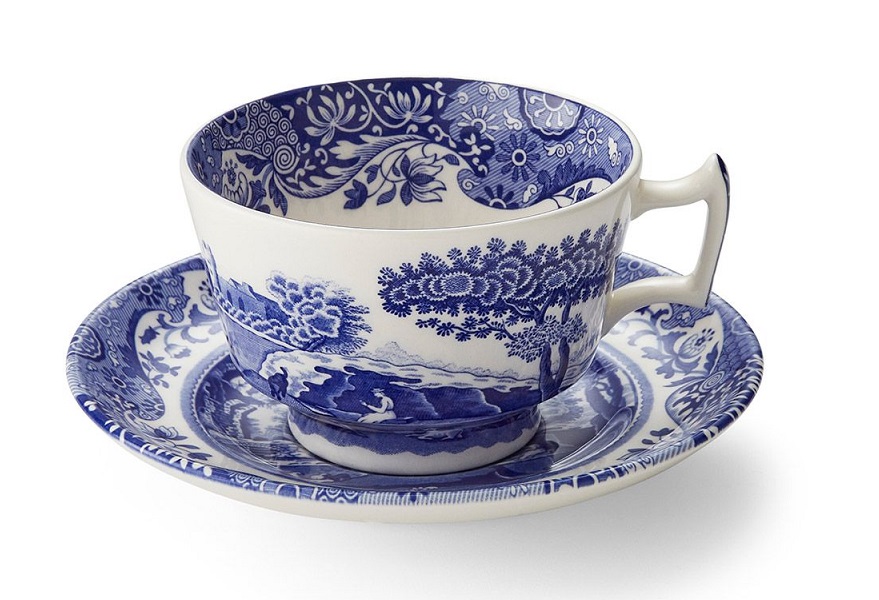
Here we stray into the realm of real ‘collectors’ and people who spend hundreds of thousands of pounds on a cup. Fair play to them I say, but to be honest, to me and you the minute details of rare and collectible porcelain don’t matter that much.

True Porcelain was developed in China in the 9th century, and is essentially a very refined stoneware. It is often delicate with very thin walls – so thin that you can see light through them – yet is very hard wearing and tough. Its development was due to an aesthetic search to find a substance that was as hard and cold as jade, and yet gave a ringing tone when struck, like bronze. True Porcelain is made from a mixture of the mineral feldspar and kaolin, a type of clay, and fired to a very high temperature (1400°) which vitrifies (melts) it into an almost glass-like state. It was exported to Europe from 1500s onwards, and was hugely different to the coarse earthernwares that made up European pottery then; this stuff was incomparable (that thing your 3-year-old made using Playdoh versus the finest China).
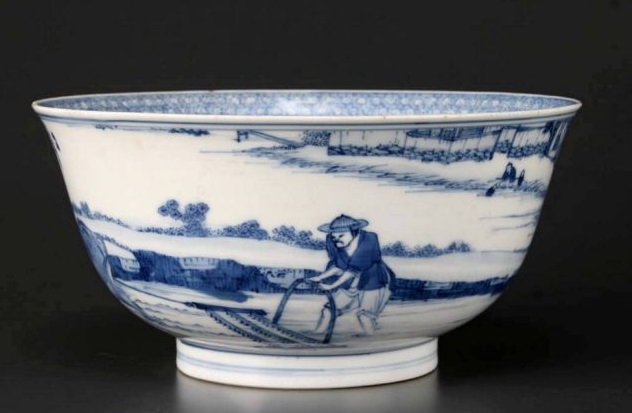
Porcelain became very popular in the 17th and 18th centuries, particularly due to tea and coffee consumption among the wealthy being fashionable – essentially they wanted something similarly exclusive to drink out of. It honestly amazes me how much of history is driven by fashion and the need to be different and ahead of the crowd – something that isn’t going to change any time soon.
Now, being imported from China meant it was hugely expensive, and many factories began to try and make it. However, no one really knew how it was done. Meisson in Germany began producing very similar pottery in the 1710’s, and others in Europe and the UK had early successes, often involving adding glass dust to fine clays. A significant breakthrough came in the mid 1790’s when Josiah Spode perfected what became known as Bone China. Here, a very fine clay is mixed with about 25% crushed burnt bone, and fired. This produced an almost identical porcelain, and it allowed the mass production of the pottery which is still going today. Also, as it became affordable, it was no longer an exclusive product despite still having a ‘classy’, even snobbish, image. Personally, I prefer an earthernware mug, but my grandparents generation would have scowled at my choice of cup. Now, at the risk of incurring the wrath of Porcelain experts, I’m lumping true imported Porcelain with Bone China here.

There are no perceptible differences at the level at which we are working, nor is it vital that we pinpoint a date of something – we are simply having fun (admittedly some of us take our fun more seriously than others who, for example, don’t clean their pottery. Or who use an egg as a photographic scale. I’m not naming names, you know who you are.). If you do want to go down that rabbit hole, there are dozens of books on the subject that allow you to explore dates, patterns, shapes, types, names, etc. However, for our purposes, it all goes under the heading PORCELAIN. I expect a visit from the heavy thugs of the porcelain collecting world within moments of publishing this.
PORCELAIN (aka Bone China, China)
DATE: Realistically c.1800 – Now. Theoretically, but unlikely, 1500 onwards.
DESCRIPTION: Thin walled vessels, delicate, with many different decorative motifs and colours, occasionally with gilding.
SHAPES: Most shapes, but very commonly tea/coffee cups, saucers, small plates.
Very thin walls, but is very hard, especially when compared with ‘normal’ pottery. The fabric is white or very pale grey, with perhaps a hint of blue, and with no inclusions – it is pure. The texture is very glassy, and is grainy with tiny voids – it reminds me of cauliflower heads, or snow. See this comparison with earthernware, for example:
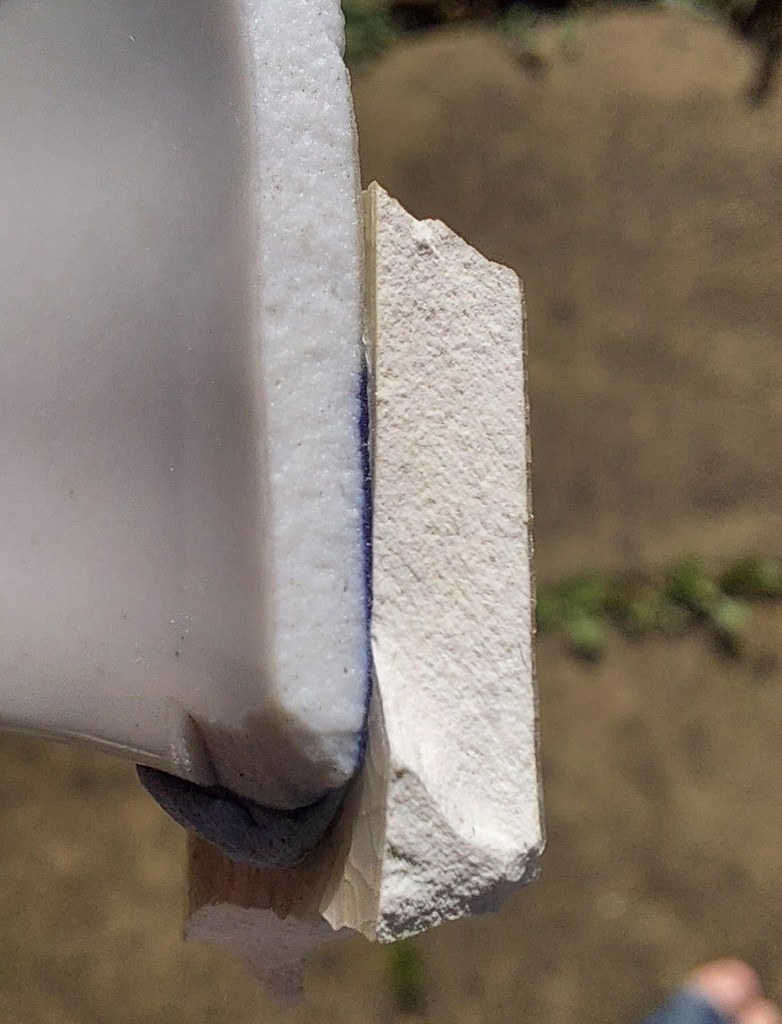
It also breaks like glass or flint, rather than pottery, with tiny flattish flakes and sharp edges.
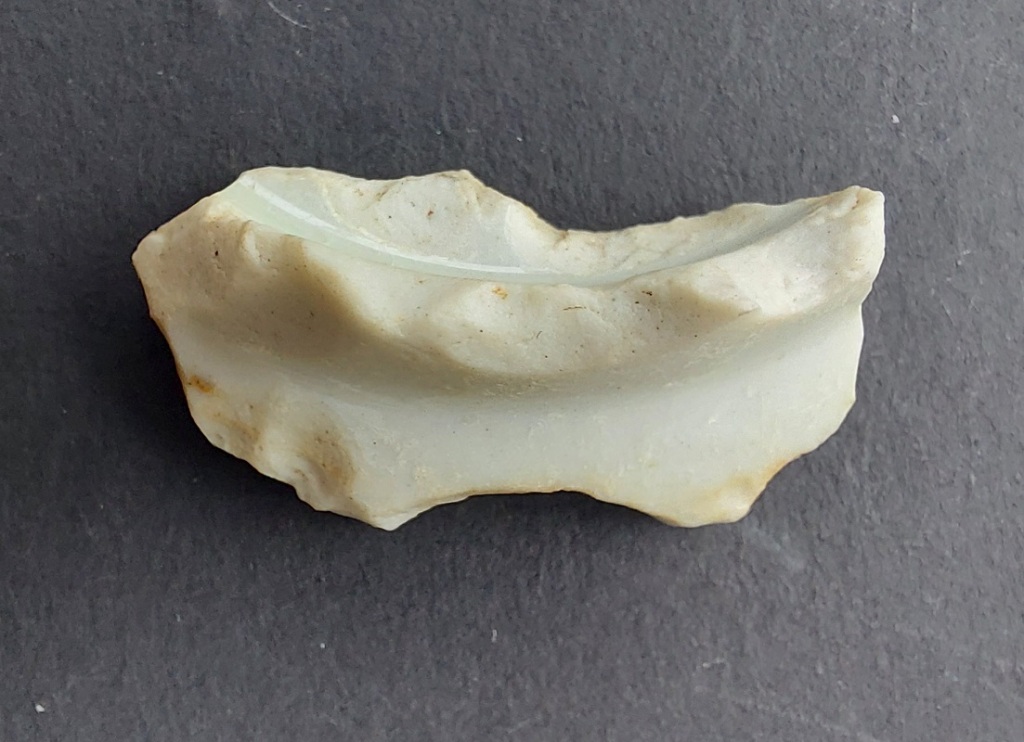
Banging sherds together, they make a high ringing sound – a ‘tink’, rather than a ‘thunk’ if you see what I mean (don’t look at me like that…). Also, if you hold a sherd up to a light, you should be able to see through it – try moving a finger between the sherd and the light source. The surface is very shiny with the glaze visible in the section as a clear white line, often with the paint of the decoration bleeding into it. Decoration is fine hand-painted images, normally in blue, though other colours are found, and normally of naturalistic scenes – flowers, landscapes, trees, etc. The start of the obsession with ‘Chinese’ decorations (including ‘Willow Pattern’) can be traced to the original porcelain vessels. Shapes are largely bowls, delicate teacups, plates and saucers, though teapots, milk jugs, and other shapes do occur. Other decoration can be painted over the top of the glaze. Later examples of Porcelain/Bone China can be very colourful, and very fine, too, often with a gold leaf gilding.
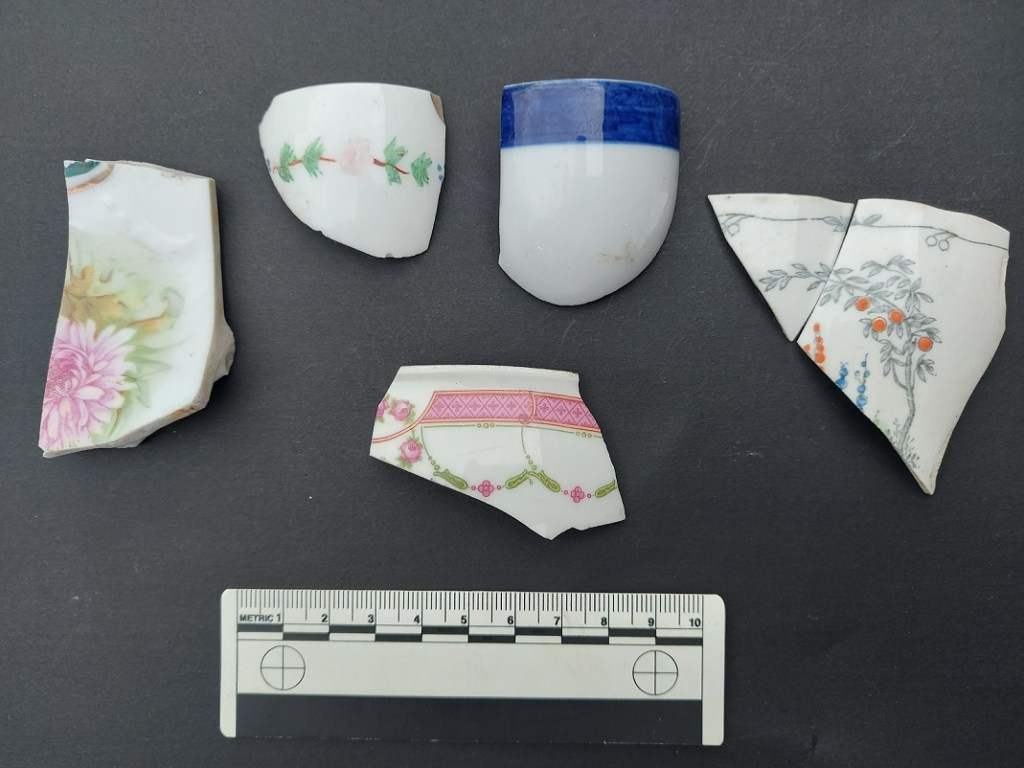

Now, because I love you so much, and I know how much you enjoy my ramblings about pottery (I’m ignoring you – you don’t have to be here, you know), I thought I’d add another related ware type.
Whilst searching for an easy Porcelain recipe, Wedgewood made numerous innovations in pottery (including the famous Jasper Ware), one of which was Basalt Ware. Although it is rare, I love this stuff.

BLACK BASALT WARE (aka Basalt Ware or Basaltes)
DATE: 1770-1820
DESCRIPTION: It is characterised by a black surface, thin walls, and impressed – not painted – decoration. Very classical Greek and Roman influenced motifs and designs.
SHAPES: Cups, Bowls, Tea & Coffee Sets, Vases, Busts, Plaques, Figurines, and Relief Medallions.
A red clay is mixed with manganese oxide, which gives it its black colour, and it is fired to a very high temperature to make a refined stoneware. It is hard-wearing, and, like porcelain, doesn’t break like ‘normal’ pottery, but more like glass, with straightish sharp edges. The fabric is very hard and very dense, as you would expect, and is totally uniform – there are no inclusions – but it is quite grainy, again, like porcelain. The gloss surface can be dull or shiny, though never a brilliant shine, and there is no glaze or surface; the fabric is the pot, which seems odd.
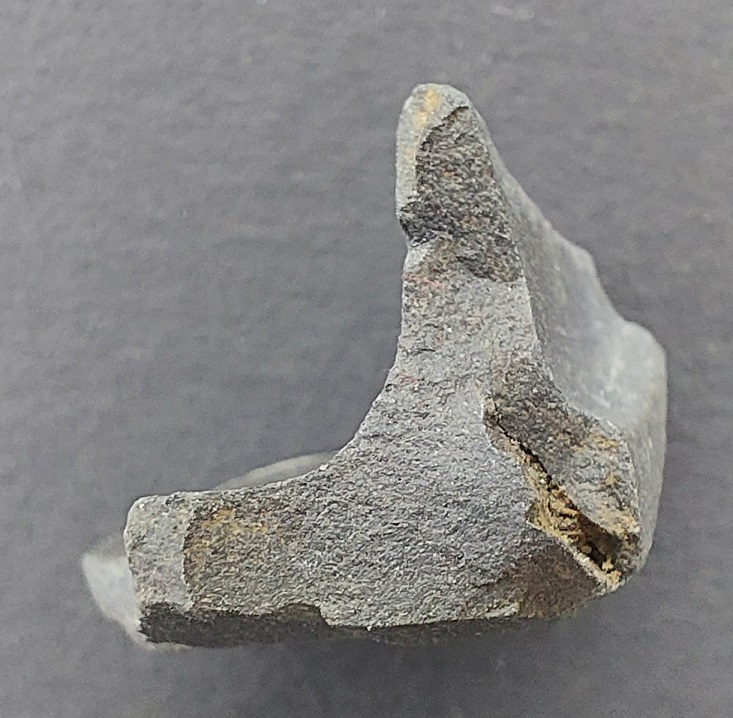


Thin walled, it has impressed and embossed decoration – rouletting, geometric shapes, naturalistic scenes with classical motifs and flora. It looks vaguely Roman, and is very heavily influenced by the Greek, Roman, and Egyptian antiquities that were being unearthed at that time, and which were fuelling the Georgian neo-classical obsession in all aspects of life. As a pottery type it’s not common, but you can occasionally find it here and there.
Well then, excitement over. That’s all for this time.
There is lots in the pipeline – both Glossop related, and further afield – so watch this space, and as always I have several large posts ready written – so perhaps two this month? You lucky people, you!
I also have a thing coming up – one of this public speaking things that I can’t seem to stop doing! This one is in Chester, and is a folklore/archaeology ‘discussion’ with the wonderful Elizabeth Garner, and called ‘The Gold In Your Back Yard‘. It’s free, but do book through Eventbrite here. It will, of course, be amazing… I think. But if not, you can just sit at the back and ask awkward questions! I’ll also shamelessly plug Liz’s book, Lost and Found (buy it here). It is a wonderful collection of folktales, beautifully told. She also mentions this archaeologist bloke, Tim Campbell-something-or-other. Honestly though, it is well worth buying.
More soon, I promise. But until then, look after yourselves and each other. And I remain,
Your Humble Servant,
TCG

 The Glossop Cabinet of Curiosities
Quite interesting and informative, thanks.
LikeLike