History · Placenames · Waterways of Glossop · Where / When

A Bridge Too Far?

What ho, one and all!

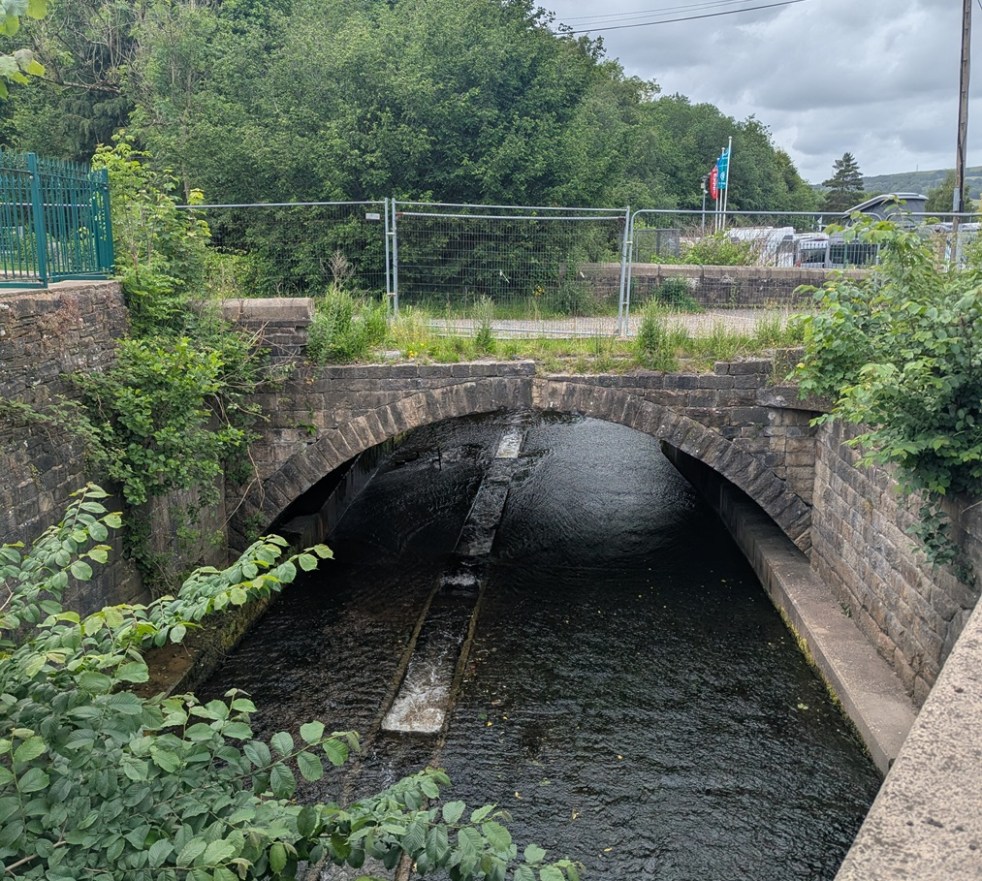
A bit of a quick one today, exploring one of the lesser-known, and certainly overlooked, bits of Glossop. Truthfully, I thought there might be more of a story here – perhaps even some pottery – but alas, there is very little to be said about today’s subject. I’m really not selling it you, am I? Ahem… so then, ladies and gentlemen, may I present Moodsbottom Bridge.

Can anyone else hear crickets? And why is that tumbleweed cartwheeling across Victoria Street? And what’s that I hear you cry? “I say, old TCG, where is this Moodsbottom Bridge of which you speak?”. Well, quite! 

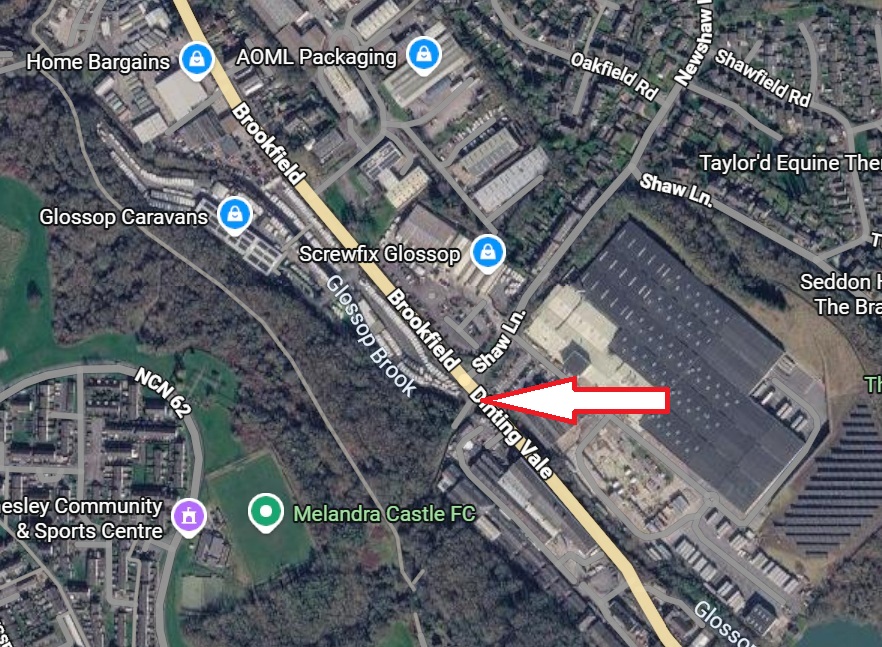
So then, it’s here…

Just before Glossop Caravans on the left, and at the junction with Newshaw Lane, it crosses over Glossop Brook. You will have driven past it thousands of times, and perhaps even vaguely acknowledged it was there, sat in traffic, but unless you were actively seeking it, you would simply overlook it. By the way, it should not be confused with the ‘modern’ bridge over the brook, the one you drive over in the line of traffic that ignores the older bridge on the left.

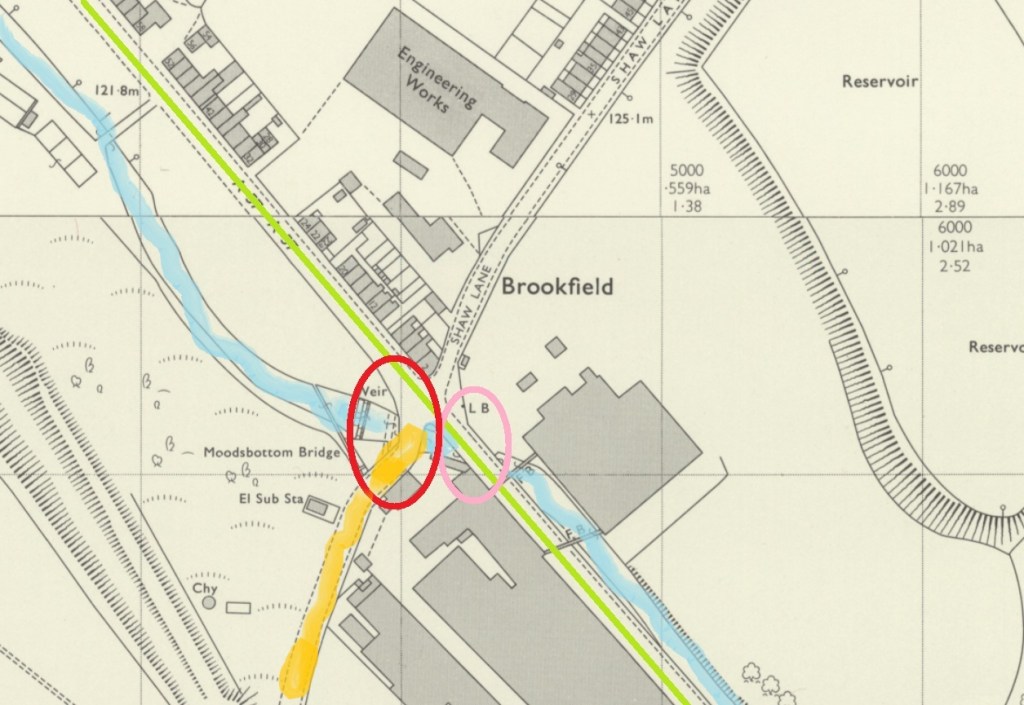
My skills with Microsoft Paint knows no bounds!

To clarify, in this image, we see Glossop Brook (marked in blue), the line of the modern road (in green), Cottage Lane  (up to Gamesley, in orange), the new bridge carrying the modern road (originally the Turnpike Road, and circled in pink), and our bridge – Moodsbottom Bridge – circled in red.

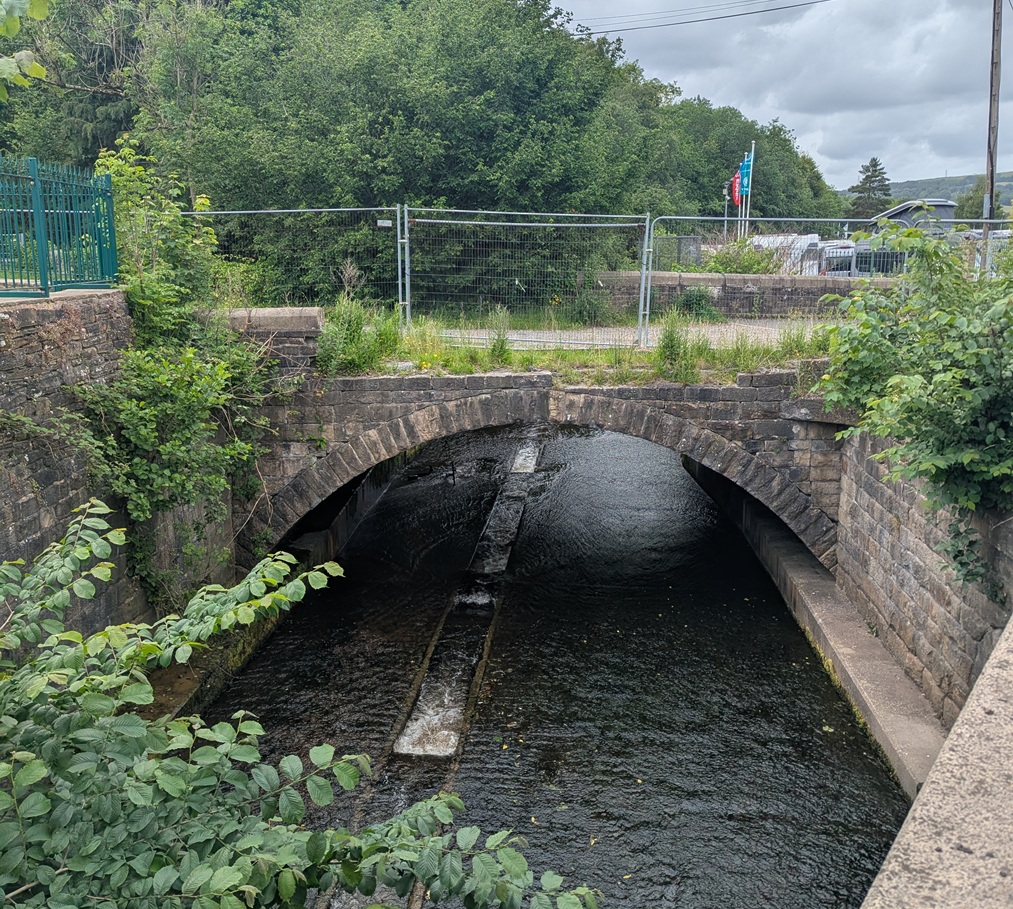
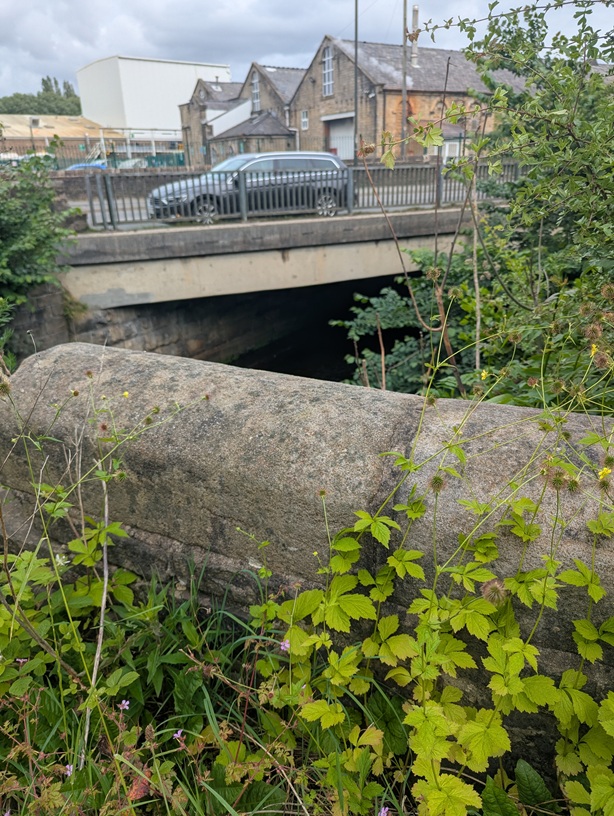
Here is the bridge as viewed from the road – it’s lost some of it’s walling, and is in a poor state of preservation, but this is what is visible now.

Glossop Brook – leading to the river Etherow – has been seriously monkeyed around with, and the whole area has been landscaped.

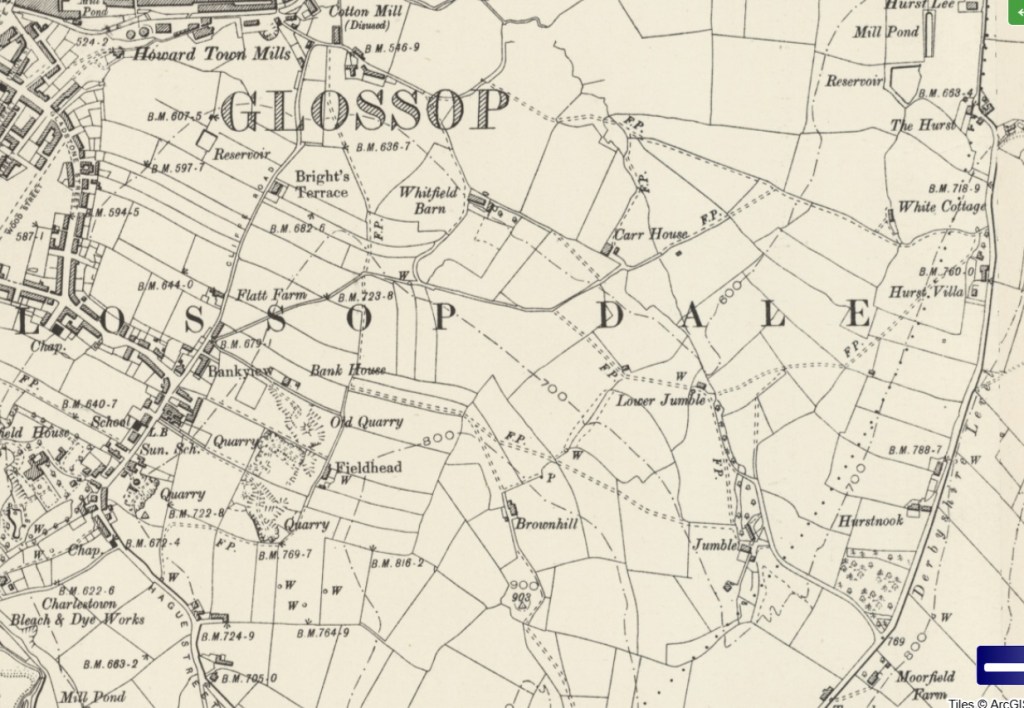
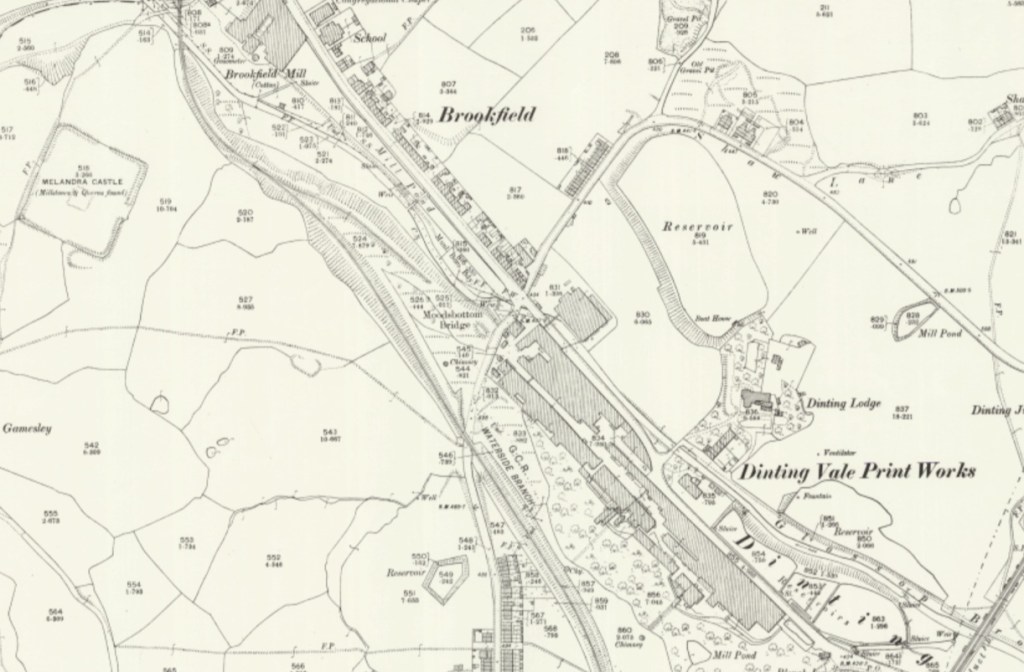
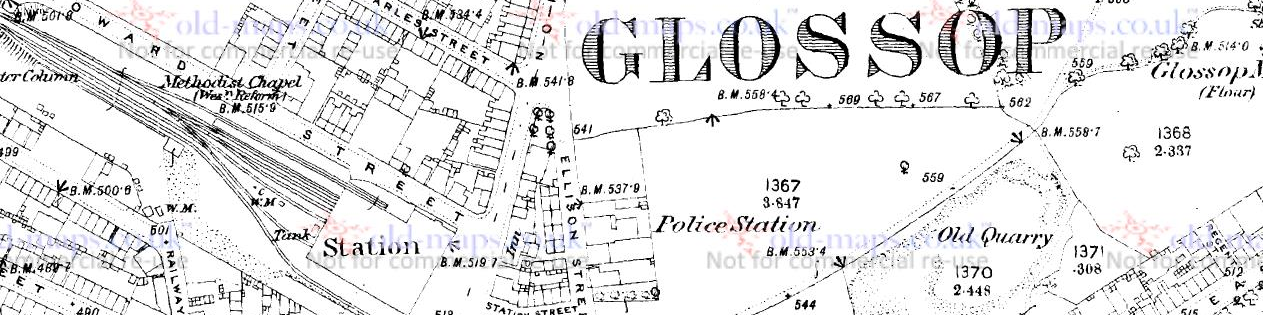
It seems to have been a fairly important crossing at one point in the past, and is the latest visible aspect of the crossing which probably started as a ford across Glossop Brook. Looking at older maps, it seems to take the track from Mottram, Hague, and Lower Gamesley Farm across the brook, as well as a track from Hargate Hill, crosses, and then up to Hadfield via Shaw, and (Old) Glossop, via Dinting. It was clearly the meeting of many of the old tracks that existed in the pre-turnpike era (pre-1800 or thereabouts), and one of only a handful of crossings of the brook.

25″ OS map from roughly 1900

And yet truthfully, though, I’ve no idea of the age of the crossing and bridge, and its history is confused and murky, which is a pity. There is very little discussion in any of the history books or articles, and a brief google of “Moodsbottom” produces just 10 hits (11, now, I assume).

As if to illustrate this frustrating murkiness and general lack of knowledge, the earliest reference to the bridge I have found is from 17th February, 1794, when the trustees of the newly formed turnpike trust ordered “the river below Moodsbottom Bridge be piled to prevent carriages travelling to the coal pits”. “Piled” here probably refers to having the river bank’s sides made steep and secure with piling, to prevent the carriages from fording it, and thus avoiding the fees for road use. But the turnpike road (now the modern, green, road in the map above) was only put through in 1804 or so, some 10 years later – so why the trustees of the turnpikes trusts were making this ruling is not clear.

At about this time (1795), according to Robert Hamnett (quoted here) a John Loton built three houses at “Gamesley Bridge” (not the viaduct over the railway, which was built in 1843). There was also a white cottage belonging to a Roger Dumphy; possibly an older building, it had some ‘pleasure gardens’ at the rear, which were apparently quite popular. Presumably these all stood on what later became known as Cottage Lane (in orange, on the map above), and which was apparently named after Dumphy’s White Cottage.

We also know that on 17th December 1863, a meeting of ratepayers was held to discuss the making and improving of certain highways. This was in response to the ‘Cotton Famine’ of the mid 1860’s, when raw cotton ceased to be imported from America due to the ongoing civil war there. The effect of this was to put thousands of mill workers out of work, and create hardship and poverty throughout the area. In order to mitigate the effect, jobs were ‘created’, and large numbers of public works were initiated – including the creation and improvements of many roads in the area. Among these were “the making of a public road from the Glossop and Marple Bridge turnpike road, at Gamesley, to the Glossop and Marple Bridge turnpike road at Moodsbottom Bridge.” – that is, what we now know as Cottage Lane. Looking at the stonework, it would seem that the current bridge dates to about that time, and the whole area seems to have been reconstructed and formalised then. What the bridge would have looked like prior to this is unknown – stone, but less… well, Victorian!

So what is there now? Here are some photographs taken last week…

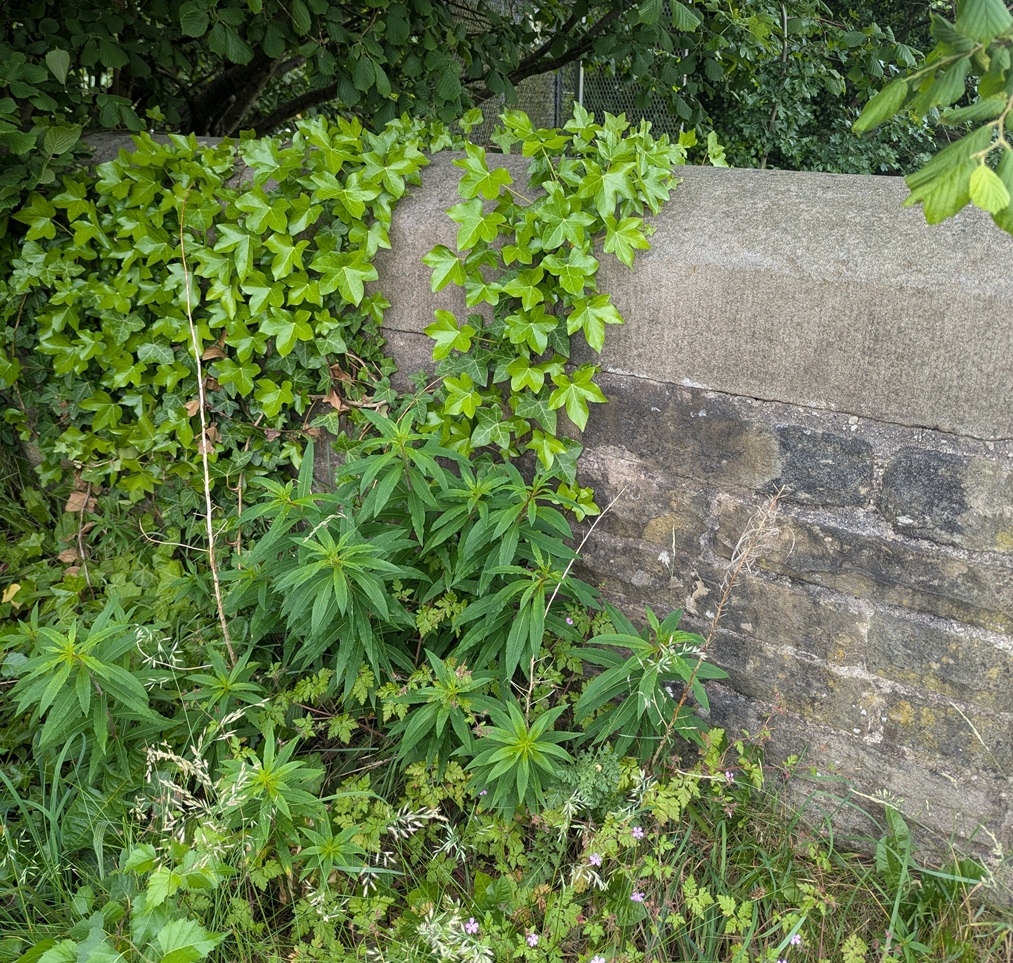
Close up of the ivy clad western wall.
Another close up of the western wall.
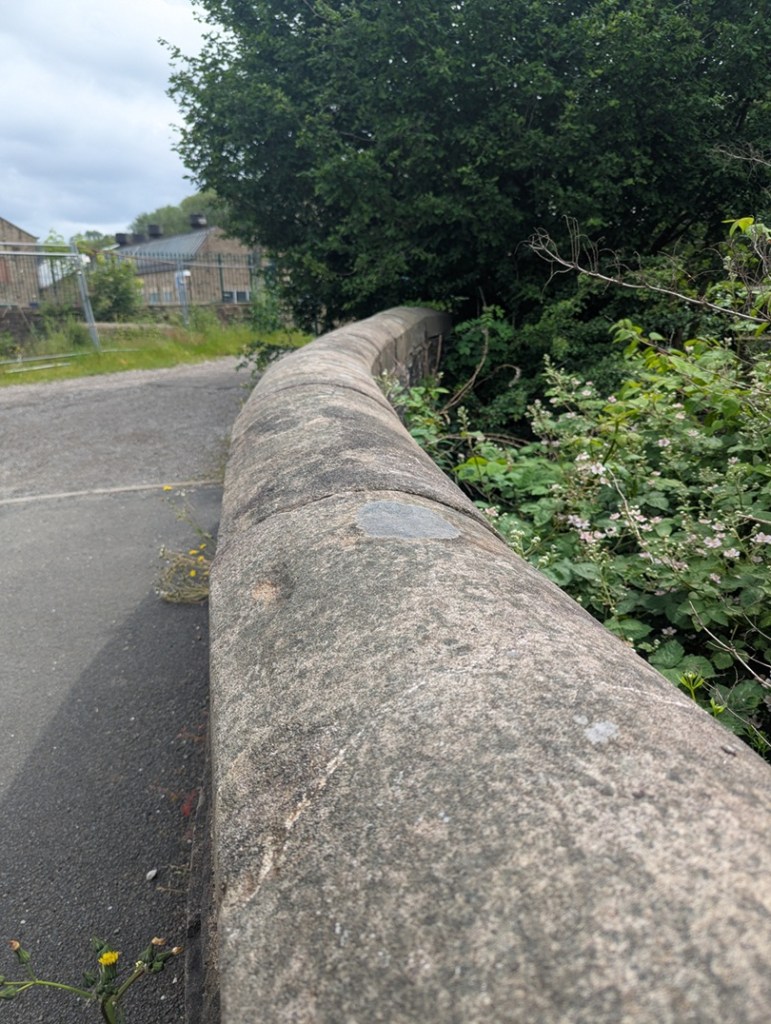
Another shot of the western wall, snaking into the distance along Cottage Lane, the lovely dressed Victorian stonework smooth and tactile.
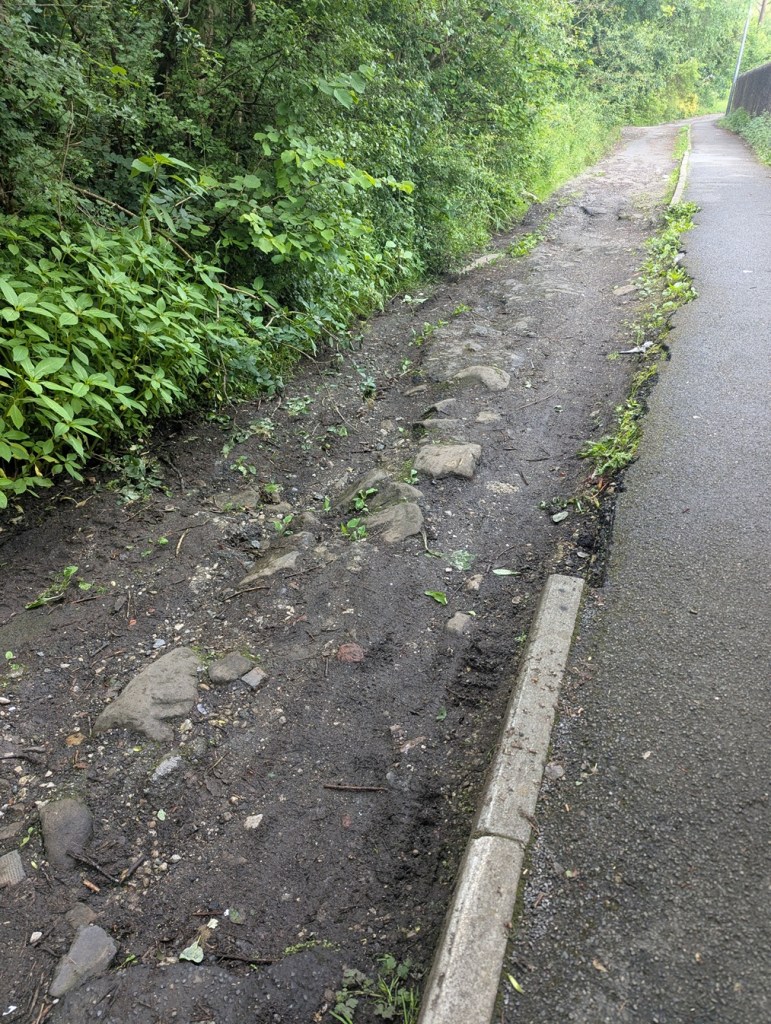
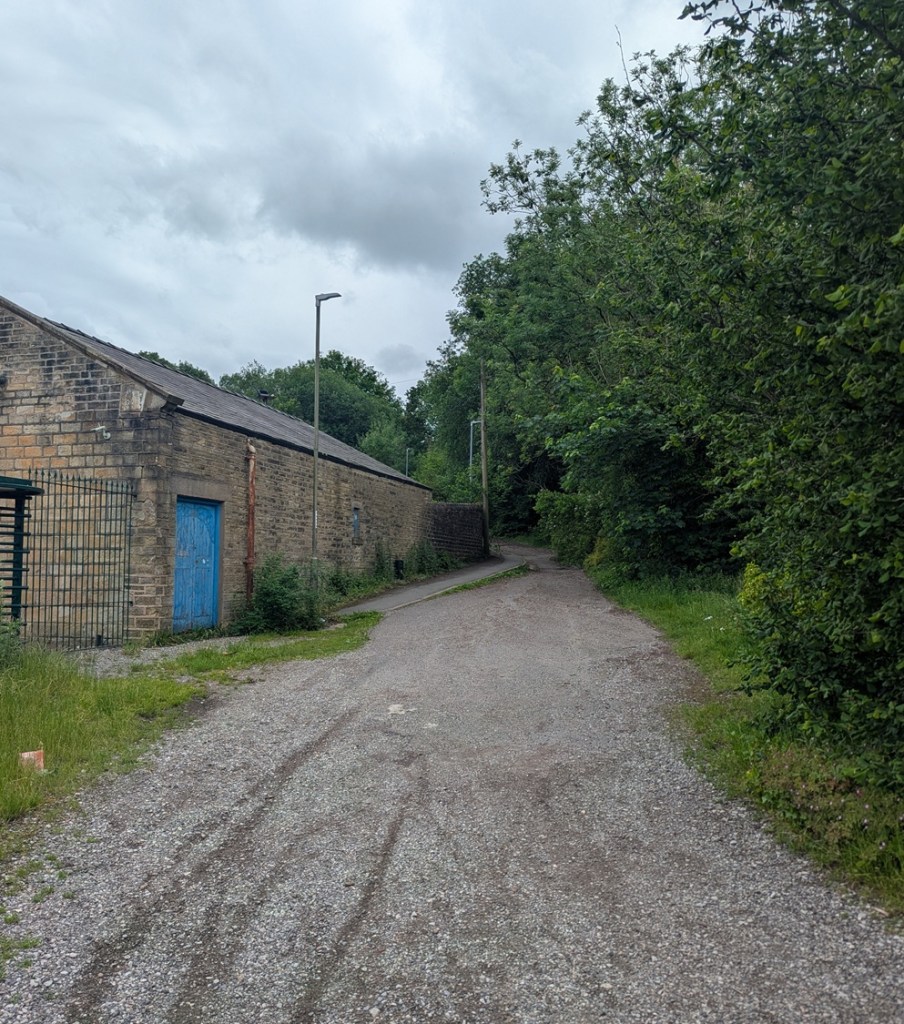
Cottage Lane – a particularly rough track all but impassable now. The large stones in the road are, I suspect, the remains of the 1863 rebuild, or even of an earlier build. And no, there was no pottery to be had anywhere around here… depressingly!
Looking up Cottage Lane from the bridge.
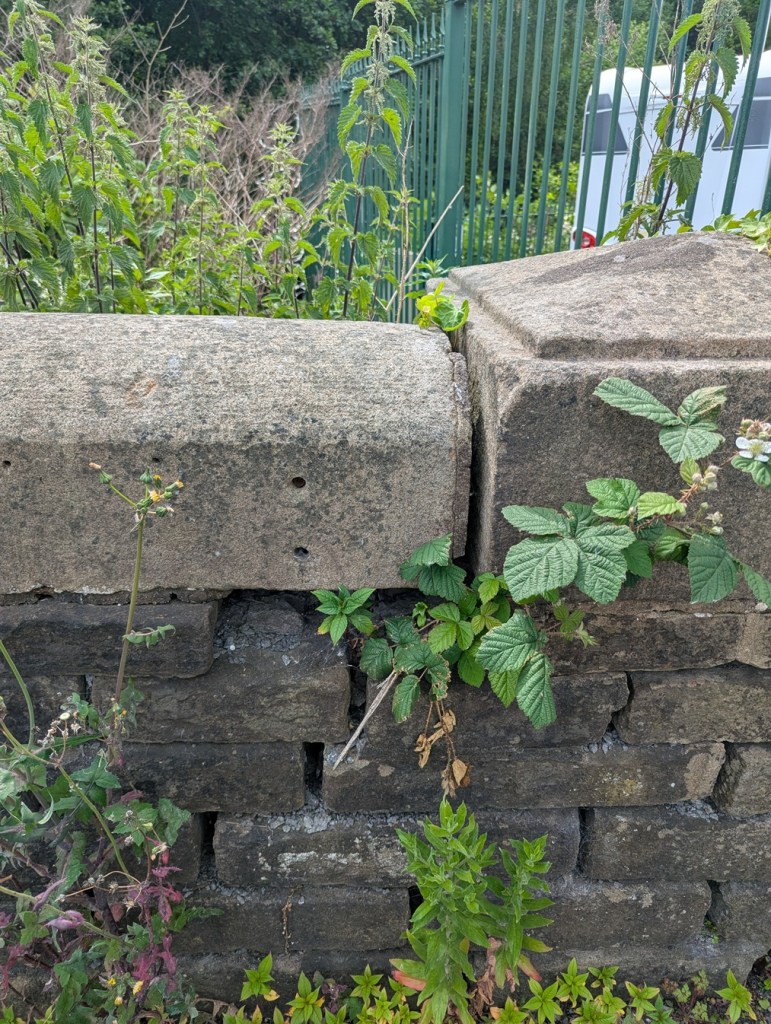
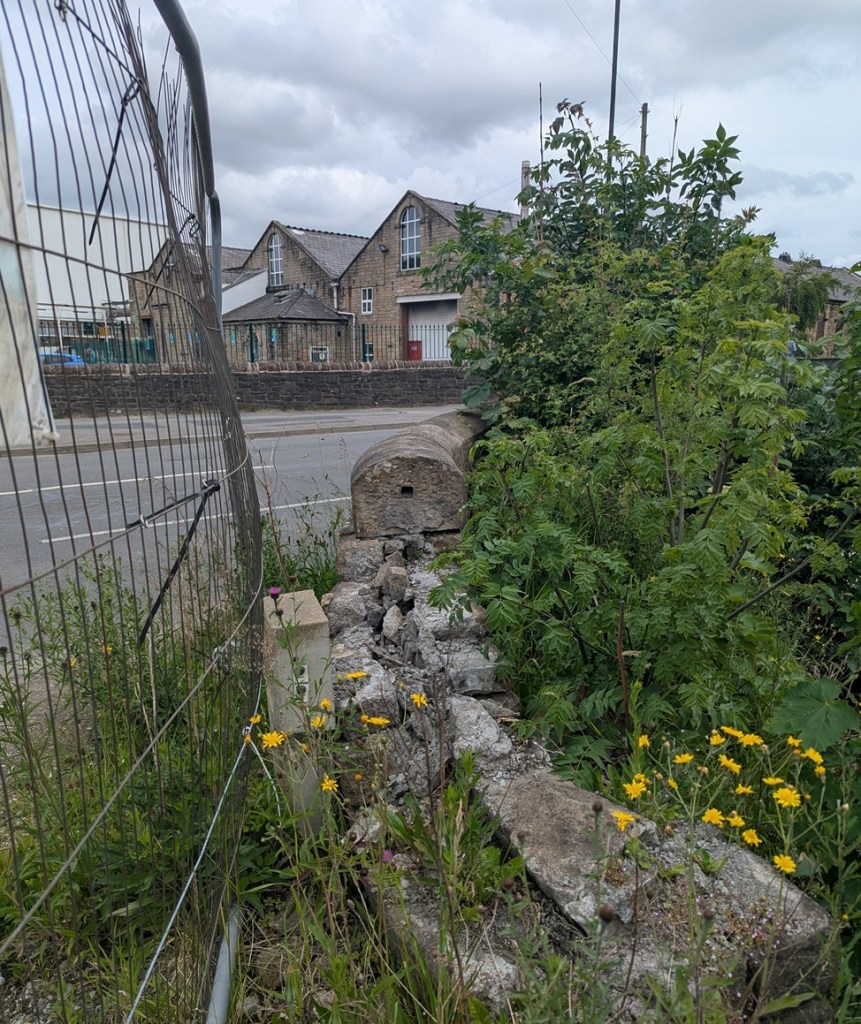
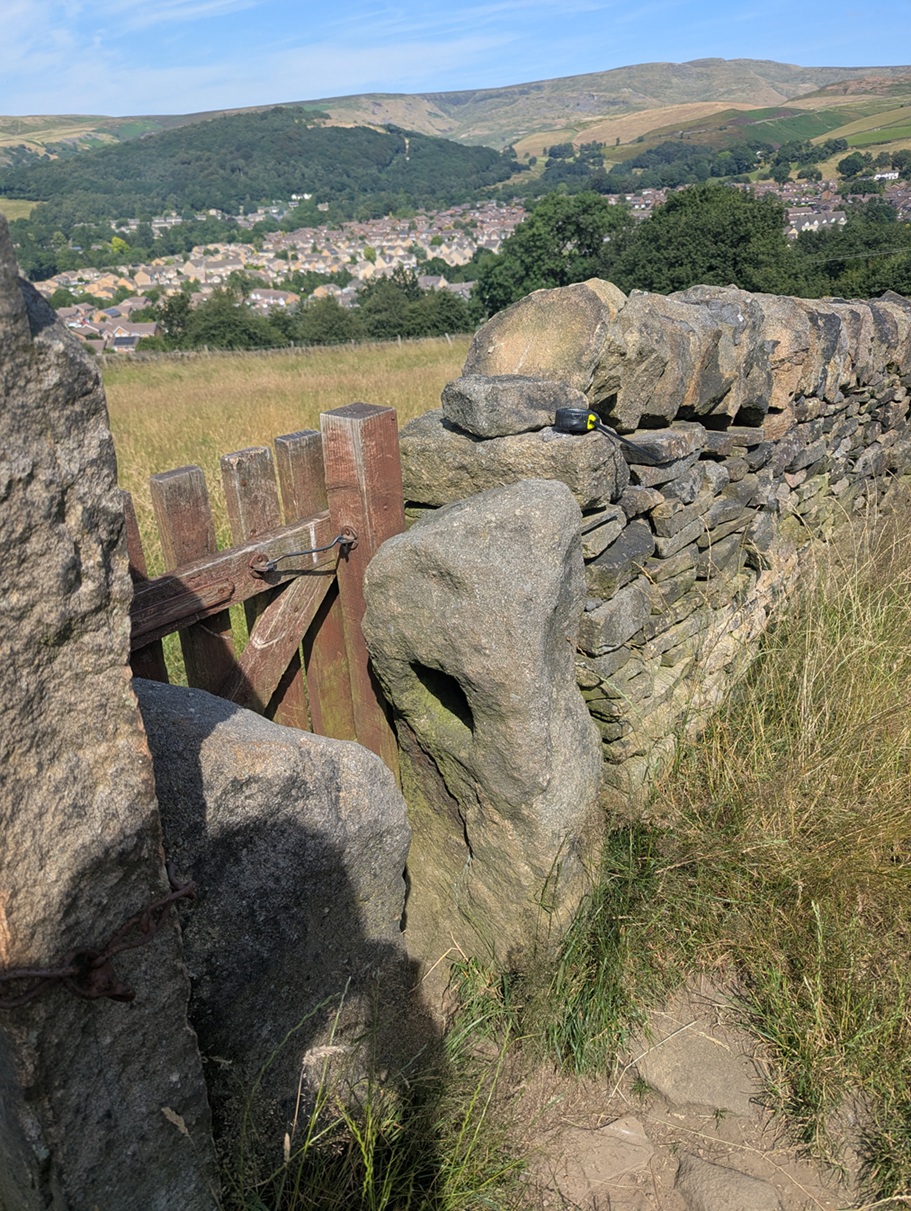
The partly collapsed eastern wall. This shows the construction method – presumably an iron rod was placed into the hole in the end of the roughly dressed stone, joining it to another similarly shaped stone.
Another shot of the eastern wall, this part still intact, and showing the modern Moodsbottom Bridge behind it.
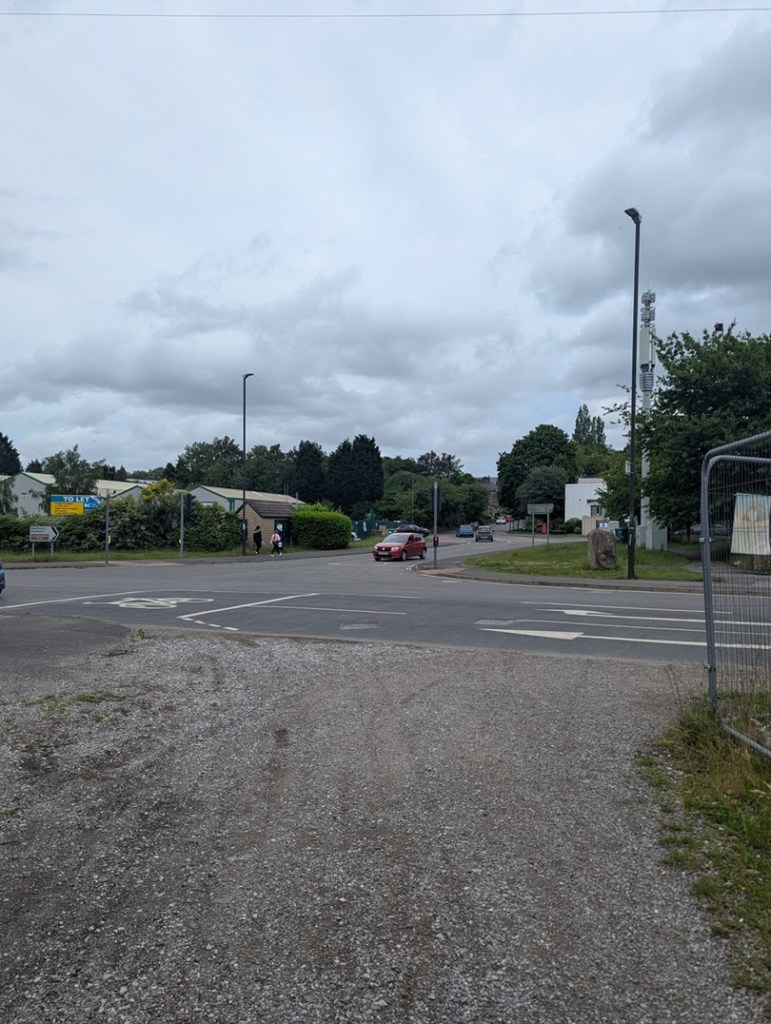
The view from the bridge at the crossroads: behind us is Cottage Lane, ahead is Shaw Lane, and running left-right is the A57, the turnpike road constructed in 1804.

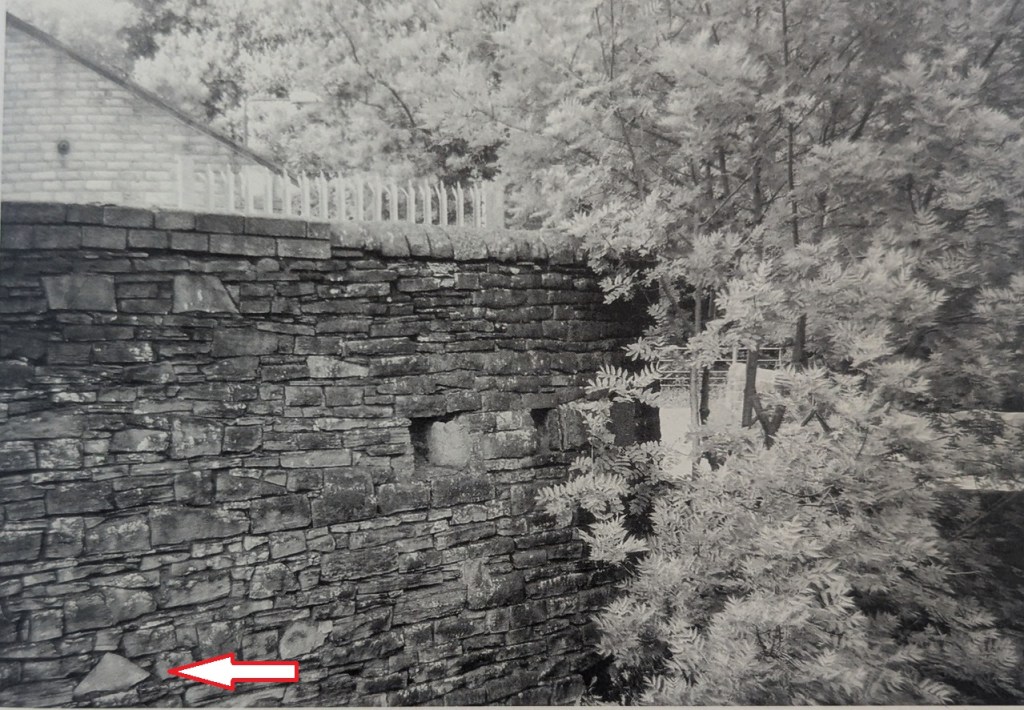
There is an interesting aside in Neville Sharpe’s book, Glossop Remembered, where he notes that during WWII, the local Home Guard put gun loops (holes that allow soldiers to shoot through) into the wall belonging to a factory that overlooked the bridge, allowing rifles and machine guns to train up the road that comes from Woolley Bridge (and Hollingworth) – the likely direction of invasion into Glossop from the west – and up Newshaw Lane to the north: even in 1940, the bridge held strategic importance.

Neville Sharpe’s photograph, in which the holes are clearly visible, as is their direction – imagine guns pointing out of them. Note the arrow pointing to a triangular stone

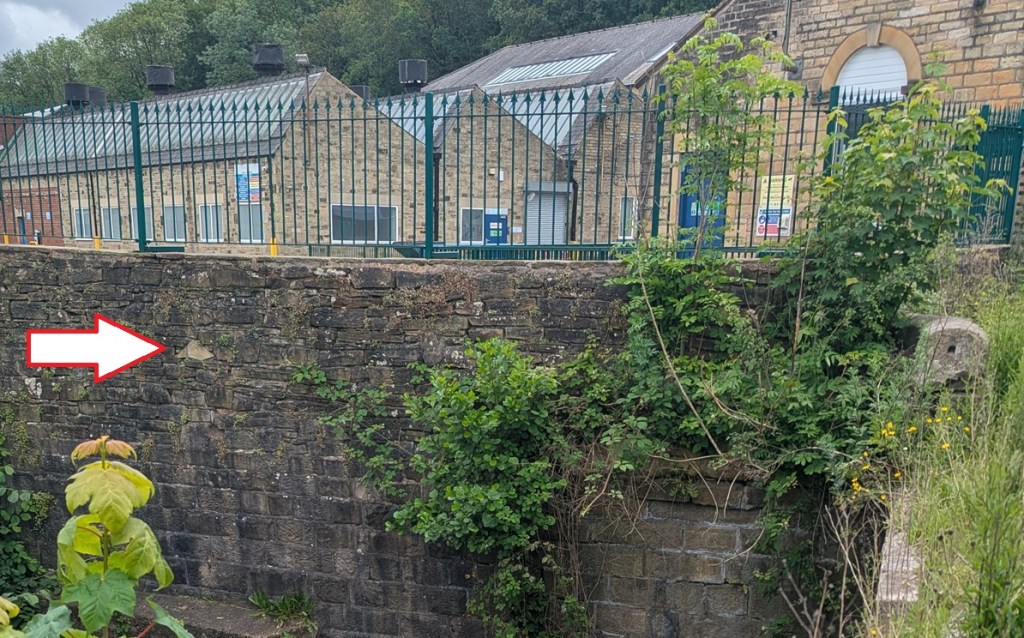
Alas, as so often happens, the evidence of the past is erased – the wall has been truncated since the above photo was taken (1980’s? 1990’s?), and as this modern photo shows, what we are left with is… not a lot. You can see where the loops were by spotting the triangular shaped stone in both photographs, indicated by the big white arrow!

The whole row of stones that includes the gun loops – and upwards – has been removed.

Incidentally, logically there must have been a similar defensive position to the east – somewhere at the bottom of the snake pass, in order to protect that road – and I think I might have a likely location! Let me check it out, and I’ll let you know what I find…

The name is interesting, though. Moodsbottom? What does that mean?

It’s named as “Mousbottom” in Ralph Bernard Robinson’s Sketches of Longdendale (1863). This seems to be a contraction of ‘Mouselow Bottom’, and may account for Moodsbottom, which sounds very similar. But – and here we stray into ‘placename’ territory – I have another theory, one that plays into the idea that Mouselow was a hugely important site in the Saxon period as well as the Iron Age, and early medieval periods.

I suspect that Mouselow, the Iron Age hillfort that sits just above Moodsbottom, was used in the Anglo-Saxon period (let’s say 9th and 10th centuries), holding a special status as a Moot place – where the local ‘council’ of surrounding villages held monthly meetings to discuss issues such as land use and roads, for example. I discussed moots here in regards to Mottram, and I have a whole article almost ready to go about this, but one of the central ideas is that ‘Mouselow’ is derived from ‘Motts Low’, the ‘mound’ (low) of the ‘moot’ (mott). If this is the case Moodsbottom is derived from ‘Moots Bottom’ – the bottom of the moot… which it is. More on this soon, I promise, but for now I’ll leave you with that tantalising glimpse.

So, there you are, a small piece of Glossop’s history, imperfect and not fully understood, and very much overlooked, but full of a possible story. Wonderful!

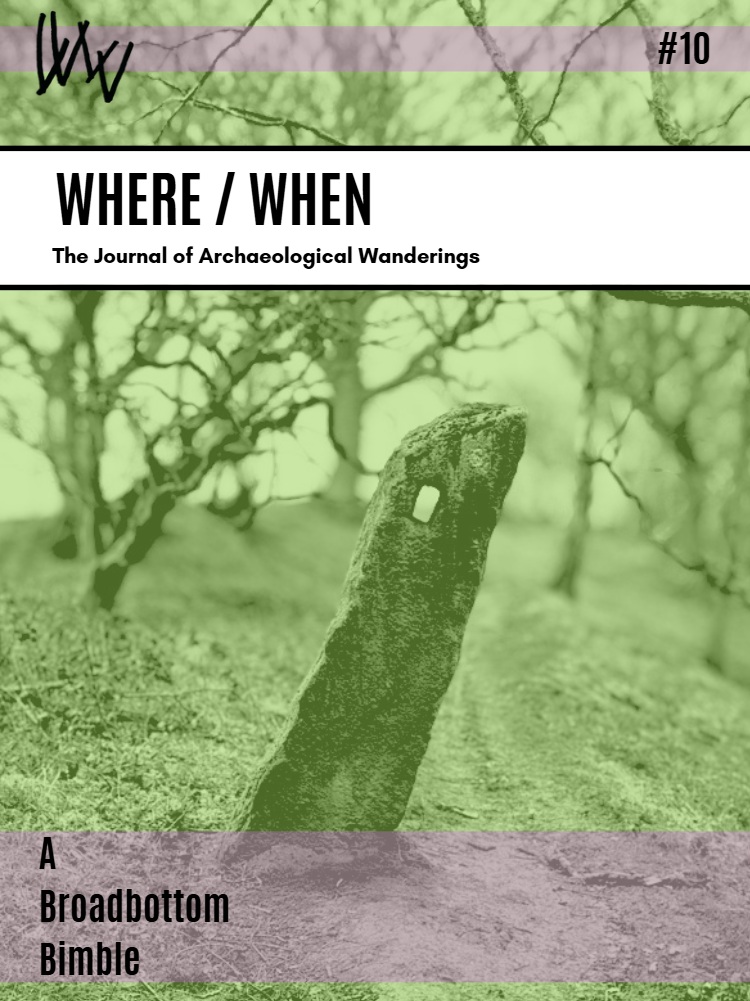
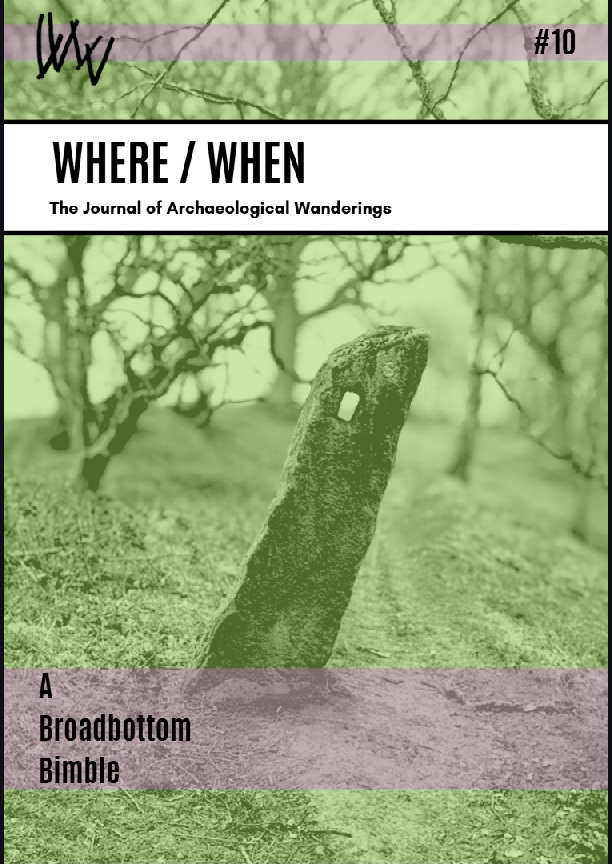
In other news… the latest Where/When has landed in the shops – both physical and online. Behold: The Broadbottom Bimble!

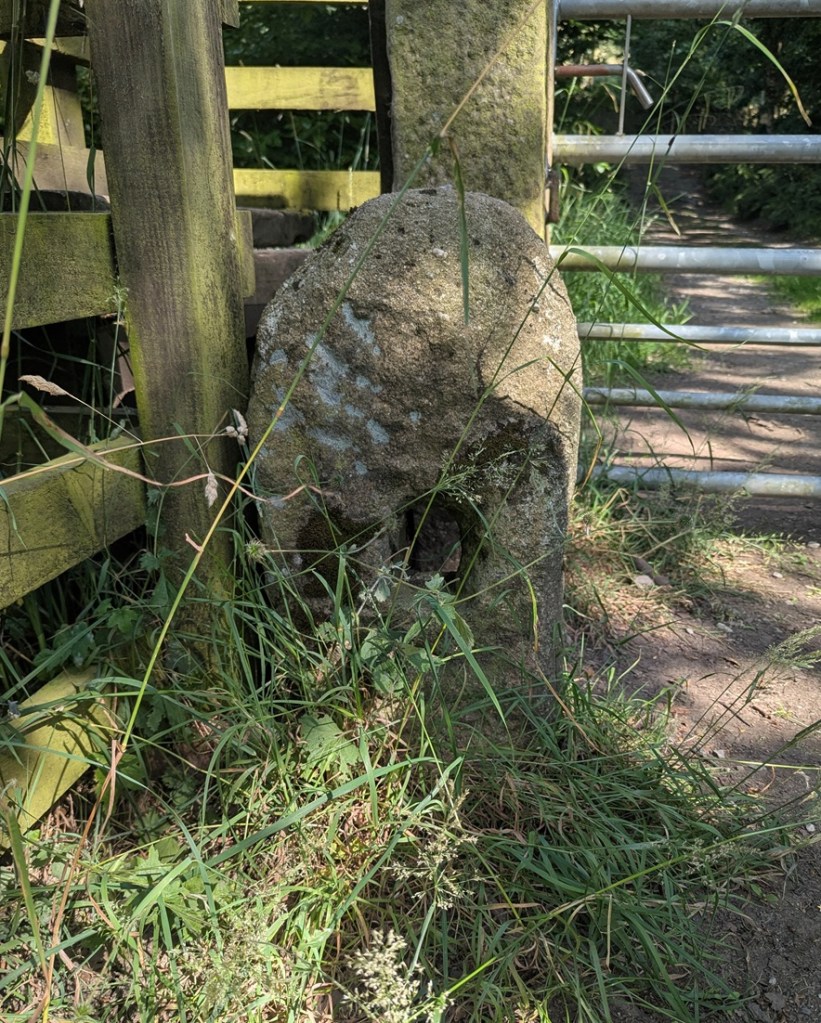
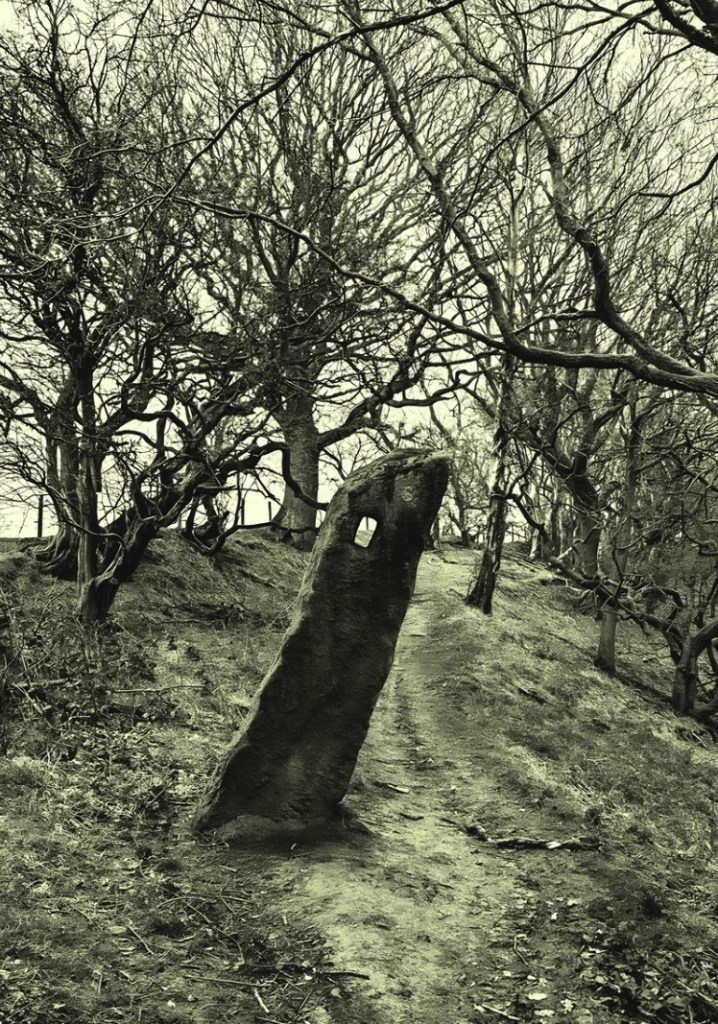
It’s a circular Wander from the station (well, let’s face it, the Harewood Arms), to Far Woodseats Farm and back, via Broadbottom Beach, some amazing standing stones, medieval fields, Georgian and Victorian factories, packhorse tracks, bridges, brooks, and some incredible geology. What’s not to love?

It’s available now, as indeed they all are (No’s 1-9) from Dark Peak Books at 96 High Street West, Glossop; from my Ko-Fi shop (and do feel free to buy me a coffee, or a glass of the stuff that cheers); or just find me in the street, hail me with a hearty “what ho!”, and I’ll give you one. Cheers, and happy Wandering.

Right, that’s all for this time. More to follow, soonish… probably. And whatever does follow will be pottery based – maybe even the final instalment of the pottery guide, or an updated version of the already published guide, you lucky folk, you.

Whatever comes, look after yourselves and each other. We live in turbulent times all around us, and each one of us is going through our own personal things. So let’s be kind to one another, because we all matter.

And so, until then, I remain.

Your humble servant,

TCG

Archaeology · Bench Marks · Mason's Marks · Where / When

Marking Time

What ho, wonderful, and slightly odd, folk of the blog reading sort. I hope you are all as well as can be expected, and as we move into autumn, you get out an about as much as you can – always keeping an eye open for pottery and other interesting things.

Which sort of leads me to today’s offering. It’s a mixture, to be honest, some updates, some new stuff, but all interesting. I have said before that I always have multiple half-written articles on the go, all moving at different speeds – but for one reason or another, none leapt out at me asking to be finished. So here we are… Marking Time!

I’ve always been obsessed with the idea of humans marking their surroundings, and the notions of permanence, even immortality, that accompany this; from palaeolithic cave art to bronze age cup and ring markings, to 17th century building datestones, to Victorian carved graffiti, to modern tags – and I’m looking here at you, Boof, whose name is everywhere around Glossop at the moment – it all amounts to broadly the same thing: marking time.

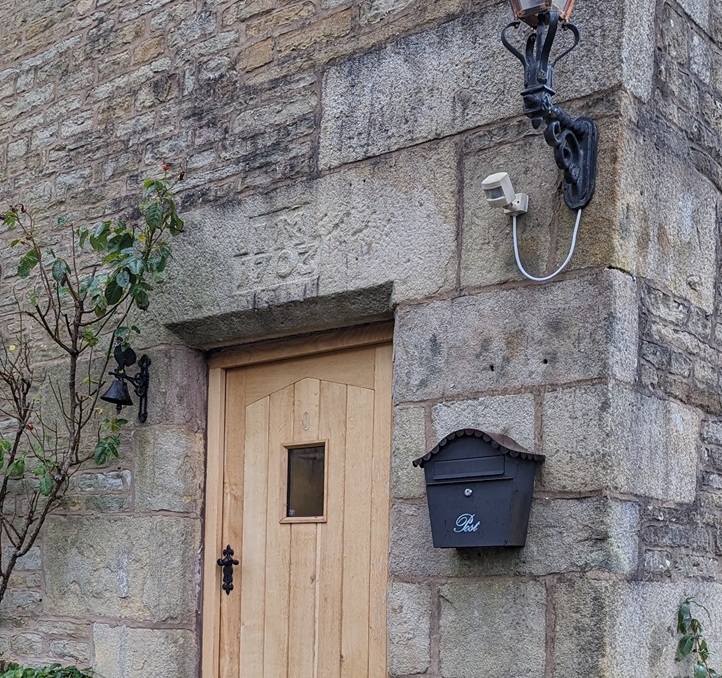
Datestones update: As always, I am on the lookout for more datestones of a pre Victorian date (pre-1837). I recently bagged this:

Herod Farm, Whitley Nab

Wonderful – ‘I.M. 1703’ – to the point, although I have no idea who I (or more likely J) M is. I have a whole article about Herod Farm and the surrounding area in progress, but wanted to share the datestone with you.

The always knowledgeable Roger Hargreaves emailed me a comment he tried to post on the site – technical issues prevented it, but here it is:

So there we have it – John Morton, and a teaser about the Lees Hall – a fascinating place, with a long history, and possibly a moat! Well worth an article and more. Thanks Roger, your input is always much appreciated.

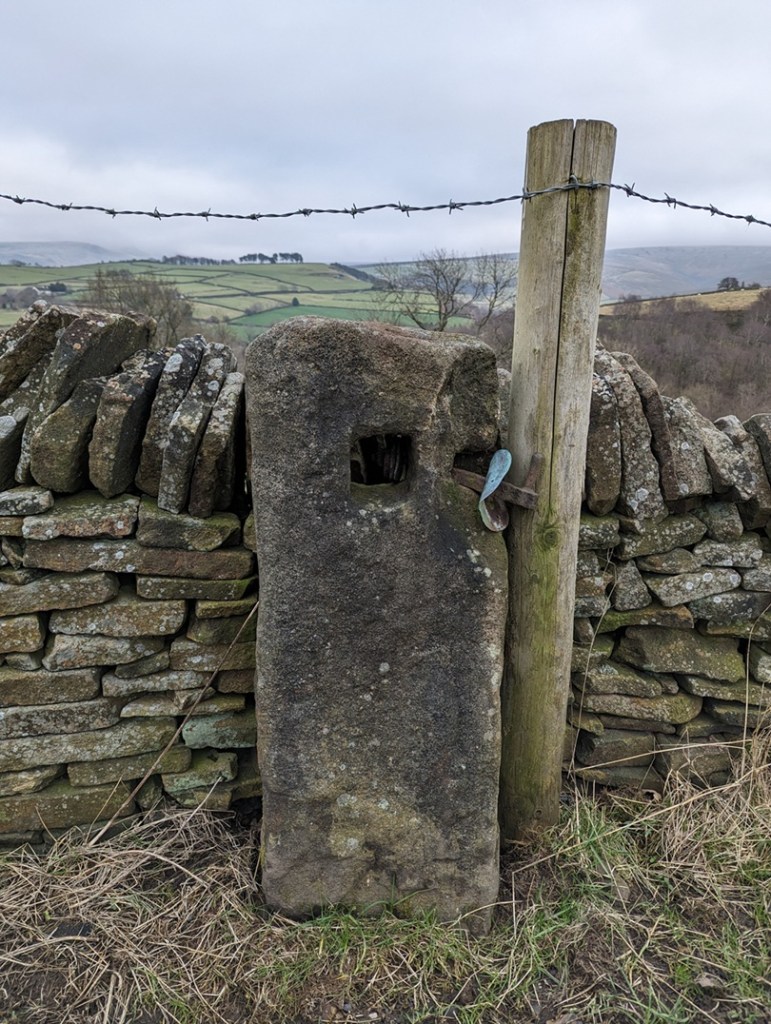
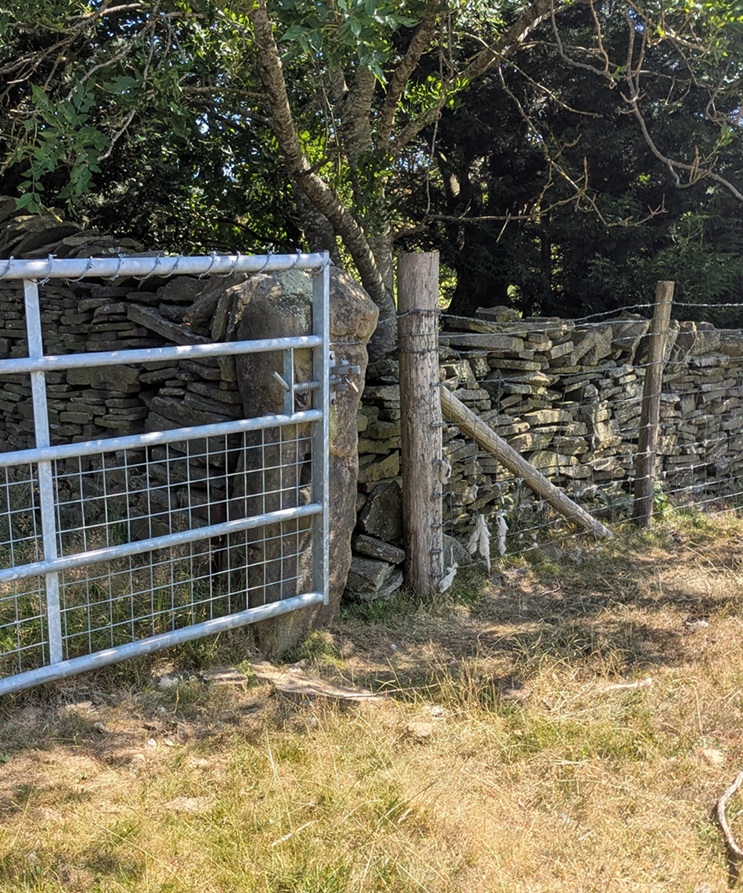
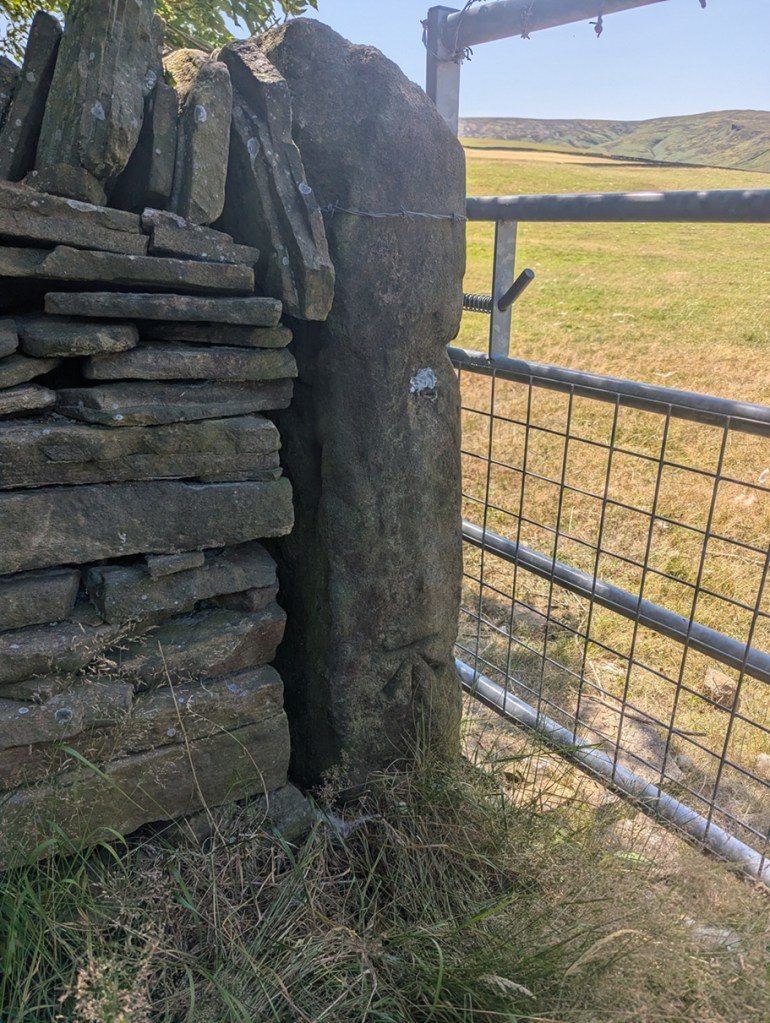
Update to the Gatepost article: We recently bought a campervan, a mobile home with beds and a stove, and all that. It’s marvellous, and is unmissably yellow, or more truthfully YELLOW! (give a shout and wave if you see it around). Our first adventure camping was to Peak Forest, near Buxton, and coming home we decided to take an odd route for the sake of exploration – a vehicular Wander, if you will. Coming through Wheston, south-east of Chapel-en-le-Frith, we came across lots of gateposts, modern and made of concrete, but each marked with initials and dates:

I have no idea who CTH is – presumably the farmer who is replacing gateposts – but I salute your attention to detail – initials and date – and respect your devotion to tradition; earlier, 19th century, examples of dated gateposts can be found here. It might be concrete, but the idea is exactly the same, and I want to buy you, CTH, a glass of the stuff that cheers. Wonderful.

Next we have things seen on pavements… Glossop seems to have inherited the whole street paving slabs second-hand from somewhere. I seem to remember a whole hoo-ha about these stones, and others, occurring maybe 20 years ago – their origin and how much was paid for them… or something. Whatever, but what is certain is that they have some interesting markings on them, and all of these were seen between Costa Coffee and the Norfolk Arms – almost certainly more await discovery, so look down people:

A simple cross, formed of two chisel strokes.
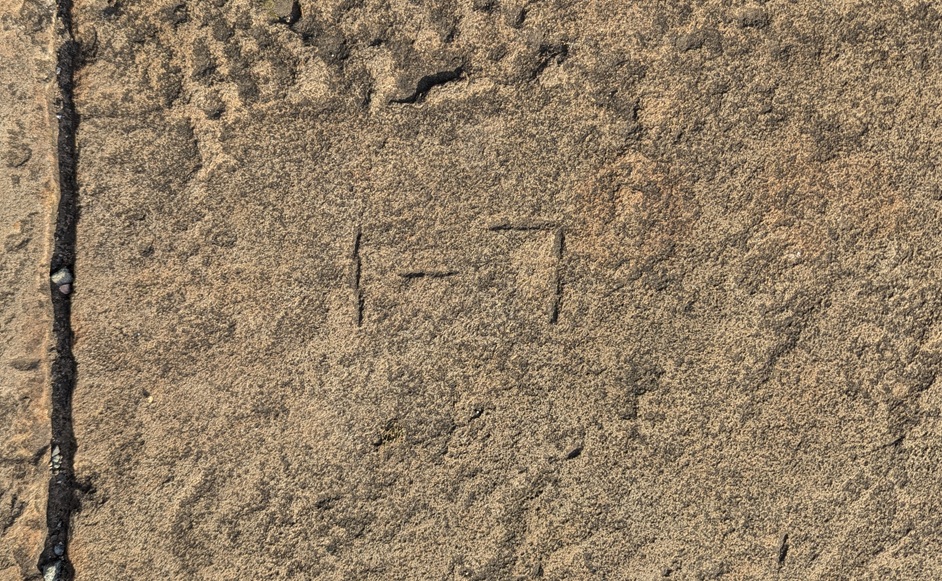
‘1 – 7’ with the ‘1’ formed apparently by three chisel strokes, the ‘seven ‘7’ by three down and two across. No idea of the meaning.
A cross, and a hole filled with a lead plug. It’s difficult to imagine what this large flat stone would need a hole with a lead fixing for – it’s not like it was used for a gatepost or similar. I genuinely cant imagine what or why!

Finally we have this beauty:

Where to start?

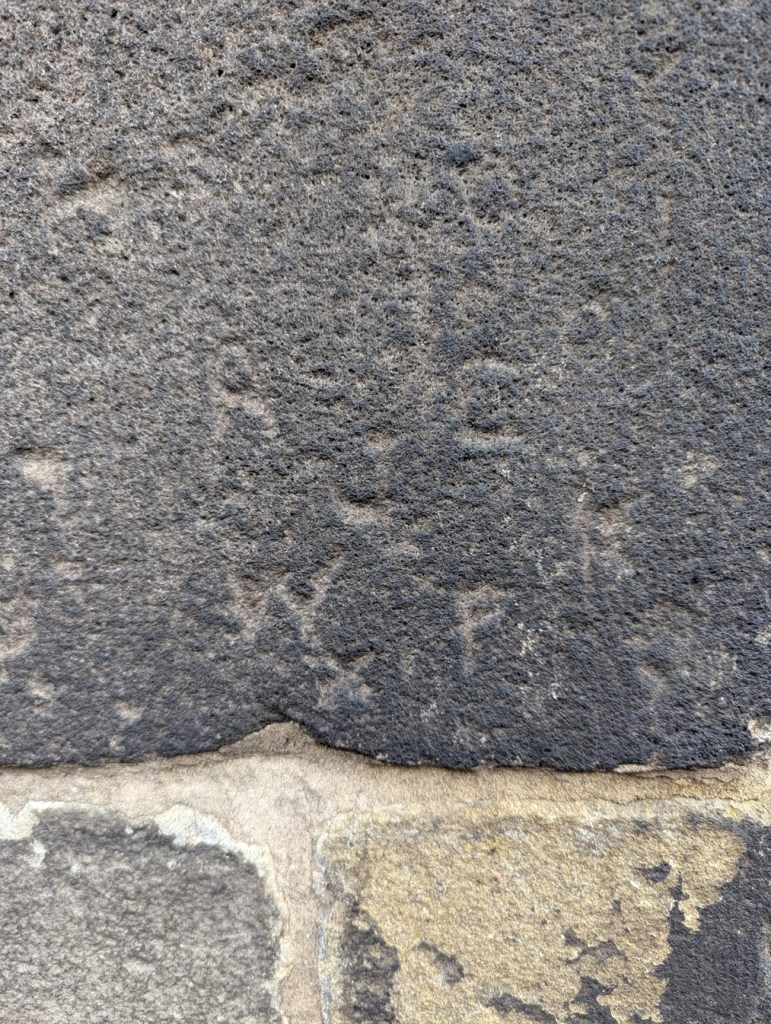
So, we have a name in the bottom left, clumsily written – ‘Joseph’ something or other… D? B? Can anyone make out this? The second letter could be an ‘E’. Possibly. But then we have what might be a landscape – the top right looks like a fat sun, drawn by a child, to me. And in the centre, at the bottom, possibly a house (I think I can see the roof and walls, with perhaps a person in it). This is really an enigma – a name, and a piece of art, undatable, and probably from a place far from Glossop… but imagine if we could put a person to it. And all this, lying under our feet.

Other bits and pieces under our feet include markings on kerbs:

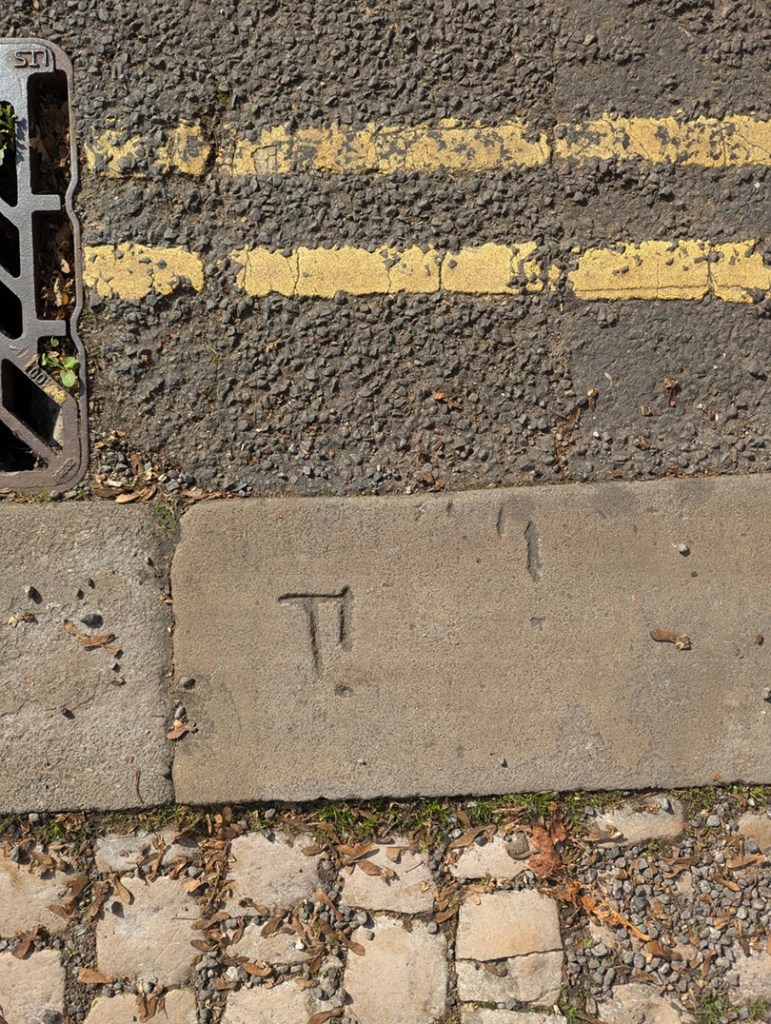
A simple ‘T’, probably referring to Telephone, and marking where the cable came into a property.

This is also sometimes marked by ‘GPO’ on kerbs, standing for General Post Office who were originally (from 1880’s until 1981) responsible for telephone communications. I once found an example on a kerb on Howard Street, but had not been able to find it since, until I came back from a blood test at the clinic there, and this was picked out of the dark by street lights:

Wonderfully carved, this was, I assume, where the telephones for the train station entered the buildings.
Another ‘T’, but this one in Old Glossop seems to have an errant exclamation mark after it!
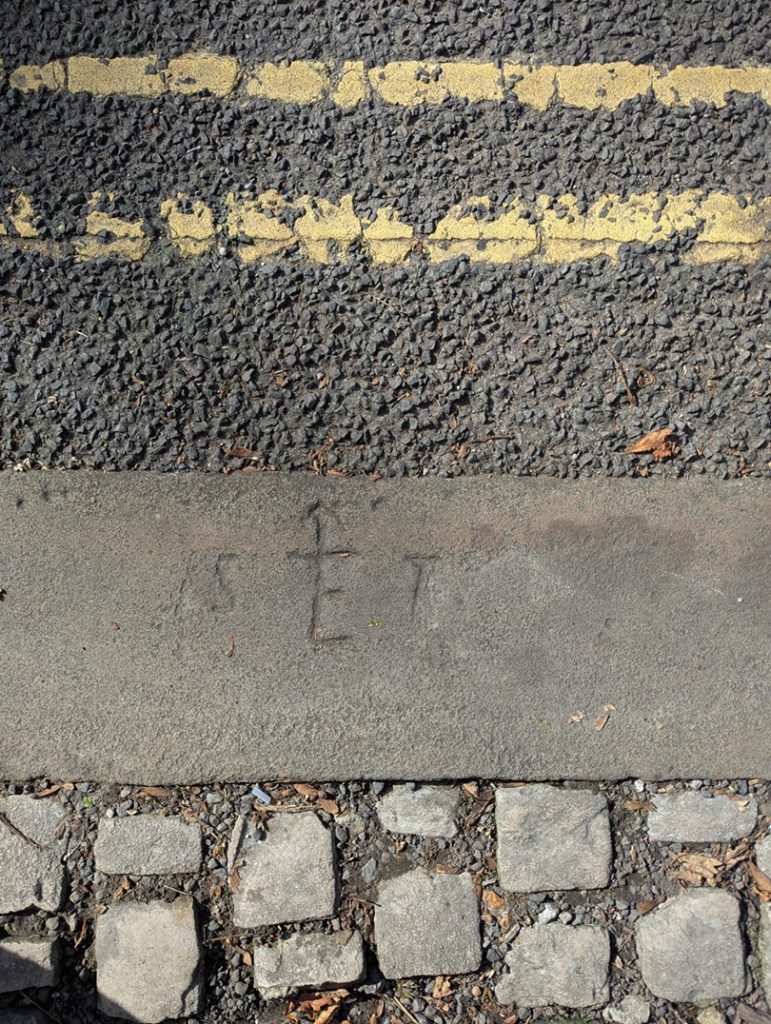
Another slightly odd kerbside marking – an ‘E’, which is believe marks the place where electricity cables enter a property. It is quite common, although in this case it is accompanied by an ‘S’ and a ‘T’, the meaning of which I have no idea.

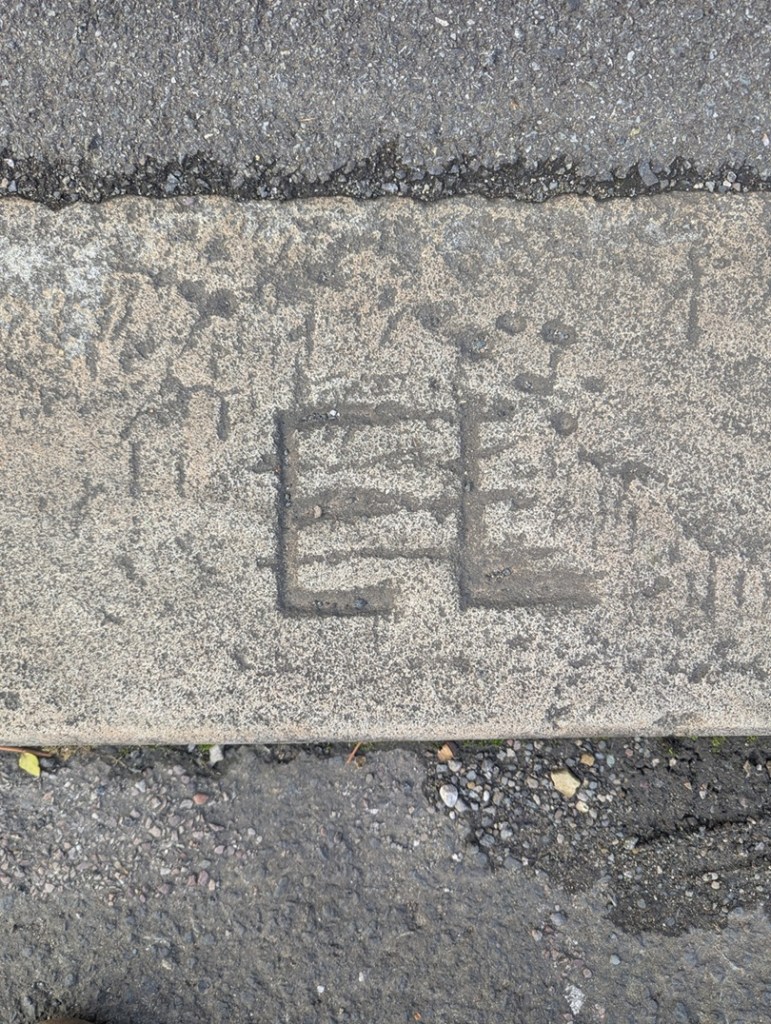
I also saw this on Princess Street – another marker showing where electricity enters a property – this is also quite a commonly found one.

A no frills, very clear and functional, EL!

Here’s another mark that is commonly seen: a simple arrow, but not like the Ordnance Survey benchmark arrow, this is normally crudely carved, thin, and without the horizontal line above it… thus:

Literally an arrow, pointing.

This is another of those that points to a service – gas, possibly, or electricity – entering a building, although I truthfully don’t know… any help would be welcome.

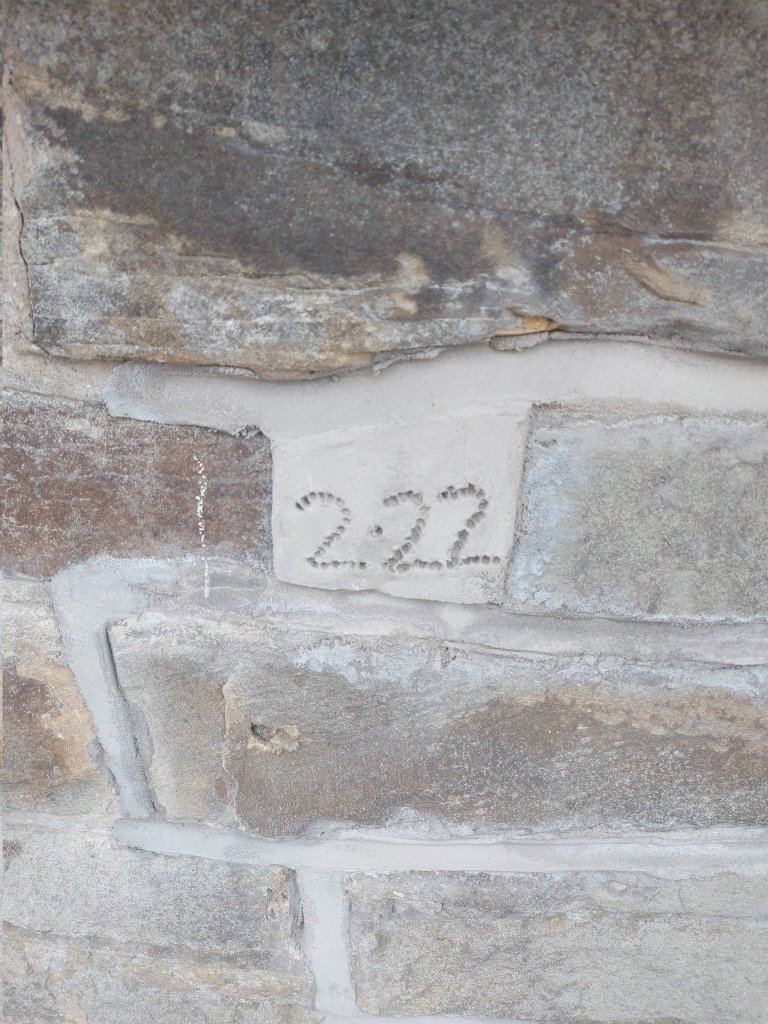
However, here is a Benchmark, newly found by me, under the railway bridge on Arundel Street, and which marks 501ft 8″ above sea level:

Worn, and almost camouflaged, there it is.

Also on the bridge are these single holes, often found in the upper part of the stone:

And here…

These small, shallow, holes were made in order to use a pincer, or external, Lewis and frame in order to move the blocks. A genius invention, it’s a simple iron tool that, via a chain, uses the weight of the block itself to hold it fast whilst it is moved, and enables even a single person to shift a huge piece of stone. But it requires a shallow hole in order to provide a point that gives a good grip. I love these, as they allow us to view how the bridge was built.

Another example of us viewing the method by which these wonderful Victorian structures were built is this:

Very characteristic.

Often occurring in pairs, these are drill marks made by quarrymen, into the rock face, which allow them to insert a splitter to pry away the stone from the quarry face. Once seen, they are very recognisable, and are the scars that show how, with a little physics and a lot of brute force, rock can be shifted.

Howard Street, which meets the Arundel Street bridge, has a few, sporadic, mason’s marks along the stretch of railway walling here:

A cross.
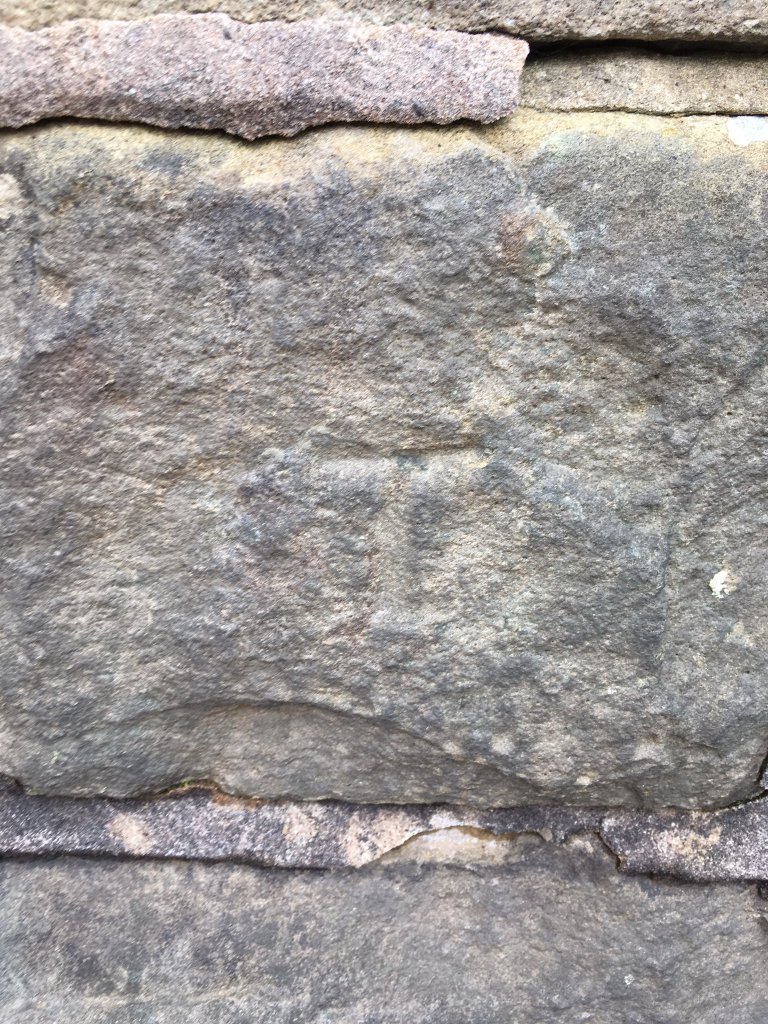
A ‘T’.

Low key, and not very common, these nonetheless represent the ‘signatures‘ of the men who shaped these stones. The cross is a common mark carved on stones – it is literally two strokes with a chisel – so it cannot be definitively linked to those masons who built Dinting Arches, but you never know.

Other mason’s marks can be found around…

A ‘B’, upended.

This is found on a lump of masonry from Wood’s Mill, and now stands where Wood’s Mill once stood, now Glossop Brook View, and by the houses there. Post-1842 in date, although possibly early, the mark was hidden until the mill was demolished – the rough dressing of the block indicates that it was never meant to be seen. I wonder who ‘B’ was.

Another, difficult to see.

This last one is on the gatepost of the Crown Inn, Victoria Street (although the gates are on Hollincross Lane); very faint – and difficult to photograph – they are in the angular shape of a fish.

I also spotted this on Howard Street:

February 2022.

A dated piece of cement. This is either dated proof of work done – a modern form of mason’s mark – or possibly a dated repair that allows Network Rail to observe cracks forming and assess integrity. Either way, it’s kind of cool!

Finally, some bits of carved graffiti, a particular favourite of mine.

A single ‘J’ on the wall of Heath Barn, Heath.
‘S’ ‘H’ on the wall of Glossop Church.
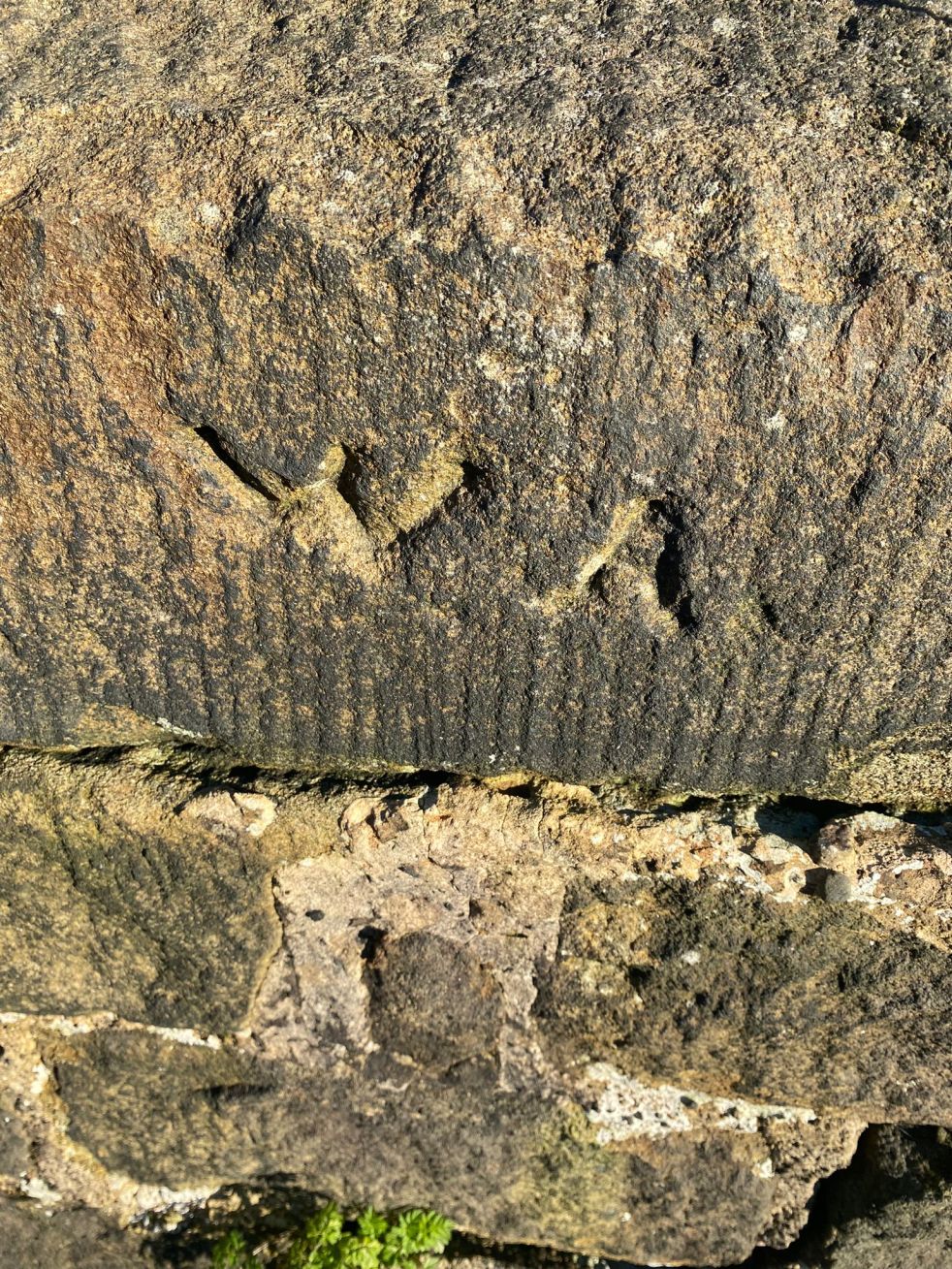
Also on the north wall of Glossop churchyard, on Church Street – initials – R C J W P. The arrangement is odd, and I wonder if they were 4 members of a single family, with the surname ‘J’. That could surely be traced if it was the case!
‘W’ ‘A’ (photo from Suze Hill)
‘W’ ‘G’ (photo from Suze Hill)

These last two were from the bridge over the Longdendale Trail on Padfield Main Road. The whole bridge has a lot of graffiti carved on it, including this wonderful example:

Old and the new. I love this photograph, and am very proud of it!

Here we have Victorian carved graffiti – ‘J.H’, possibly, along with some more letters, undecipherable under the frost, over an early incarnation of the now famous (infamous) BOOF graffiti tag made with a spraycan. I find it interesting that we would condemn one, but praise the other as historical and interesting. When does vandalism become history and worthy of study? A bigger discussion, and one I find fascinating (akin to when does something become archaeology?). I know graffiti, as in modern graffiti – put it down to a misspent youth and a love (despite appearances to the contrary) of Hip Hop – and I have followed BOOF’s career with a certain interest.

So here I shall leave it. Making marks, and marking time – it’s all about trying to achieve immortality, to leave your mark long after you are gone, and making people remember you, even if they don’t know who you are. I think that’s all any of us, myself included, can hope for. There are so many examples of this phenomena in the Glossop area, and I have an idea to produce a book looking at precisely this sort of thing – watch this space.

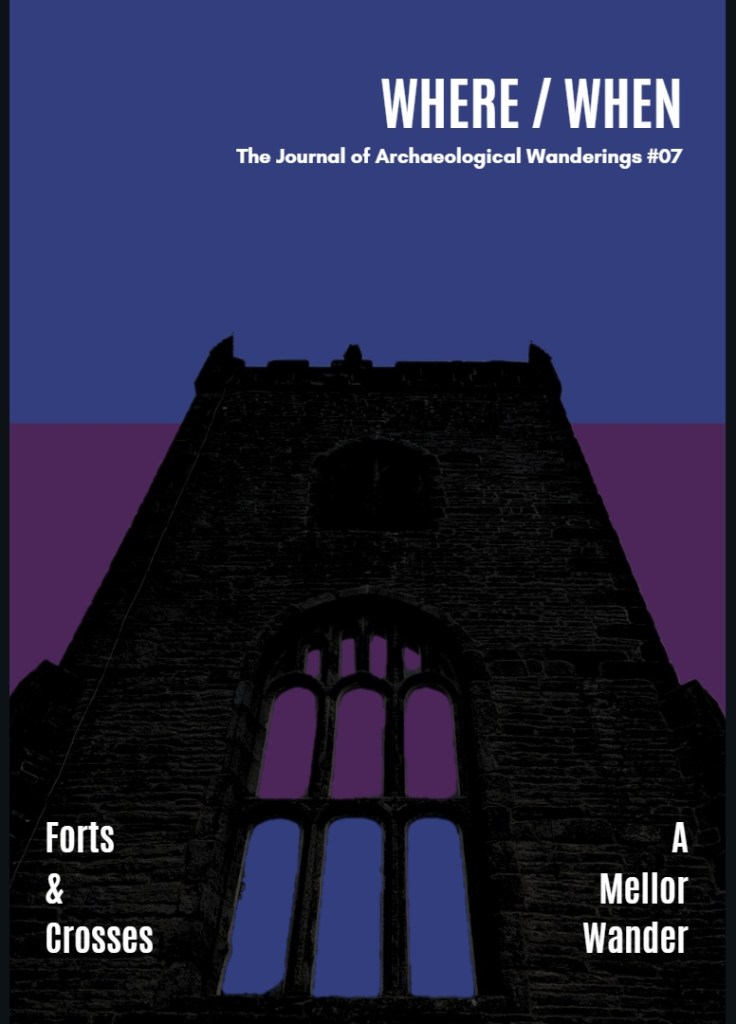
Talking of books, please check out Where/When Number 7 – Forts and Crosses: A Mellor Wander.

This one is a truly awesome Wander around Mellor – just over yonder! It has medieval field systems and farms, Victorian noise, an Iron Age hill fort, medieval crosses, cracking views, a terrifying viaduct, bench marks, a trig point, wonderful gateposts, and it starts and finishes at a pub… what’s not to love? Here’s the cover to tempt you.

Available from the shop, link above, or from Dark Peak Books and Gifts, High Street West, Glossop. Or, you know, just track me down and throw money at me.

Talking of which… if you enjoyed this, and fancy buying me a glass of the stuff that cheers, then please do so via this link to my Ko-Fi page. I do what I do here because I love doing it, and I feel it’s important we explore our shared heritage… but I’ll never say no to a pint in thanks!

So much more news to share, and so many things planned. Watch this space, wonderful people, as big things are coming.

But on a serious level, how are you doing? Genuine question. Personally, I’m a little down at the mo… the devastating loss of my brother (cheers Stephen, I’ll miss you), coupled with a dose of Covid, and the general malaise that accompanies the move from summer into autumn and winter, has meant a lull in the festivities here at CG Towers. Still, the wheel turns, the seasons they change, and life will inevitably continue, and on we go. But as I always say, look after yourselves and each other, you really are important, and too often we say “I’m aright” when we actually mean “I’m not alright, please help” – it’s ok to not be ok.

So then, more coming, but until next time, I remain.

Your humble servant,

TCG

Archaeology · Where / When

Where/When #2 (and other news)

What ho, what ho, and indeed… what ho!

A quick one now, just to spread some news. A bigger article is in the offing, honest.

So, the big news is that the second edition of the archaeological Wandering zine Where/When is now at the printers, and promises to be with us sometime next week. Fingers crossed.

As you can see, it’s blue. Not that that makes much of difference to anything, as it’s chock full of the usual noodlings and doodlings, history and archaeology colliding with my, er… ‘unique voice’, as it has been described – in a psychedelic swirl of colour and trackways.

This one describes the route between The Bull’s Head in Old Glossop and The Beehive in Whitfield, using – where possible – the medieval and post-medieval trackways, often preserved in surprising ways. Along the way we encounter all manner of archaeology and history, a ghost, a hall, two 1960’s housing estates, a team of oxen, a well, and a Roman road.

It’ll be available to buy from Dark Peak Books and George Street Books for the very reasonable price of £5. Or you can track me down and buy one. It will also be available to download as a PDF from the Where/When page at the top of the site (for the price of a glass of the stuff that cheers, via my Ko-Fi page (and do feel free to buy me a glass anytime!).

This second volume is actually the first of a two-parter, the next volume being the return journey from The Beehive to The Bulls Head, using entirely different tracks, and exploring entirely different archaeology. This is titled, naturally, ‘Of Hives and Heads‘, and will be available very soon – watch this space.

The other big news is I’m doing a talk for the George Street Community Bookshop – one of their Curiosity Club events. It on Thursday 25th April at 7pm at Bradbury Community House, on Market Street in Glossop. The subject is the vague sounding ‘Archaeological Wanderings‘, which is just how I like it – expect old stuff; medieval trackways, Wanders, flint, idle talk of wondrous things, pottery, Romans, and possibly some Anglo Saxon crosses thrown in. A psychedelically-tinged swirl to the thrum of history, if you will. Or if you prefer (and why wouldn’t you), I’ll be talking about the history of the Glossop area to a group of people who may or may not be interested.

But do come along, it’ll be a blast, and you’ll get the opportunity to ask me all sorts of awkward questions. No, not you, Mr Shouty Outy… you are barred. You can book a place here, on eventbrite – tickets are priced as you wish, and it’ll be good to see any of the seven of you who read the site (sorry Juan, unless you can fly out from Caracas on Tuesday, you’ll miss it. Lo siento amigo, ¿la próxima vez quizás?).

Right. I have a proper article almost written – obviously pottery related – that I need to finish, so forgive me for rushing off… I’ll be back soon, I promise.

Until then, take care of yourselves, and each other, and I remain.

Your humble servant,

TCG