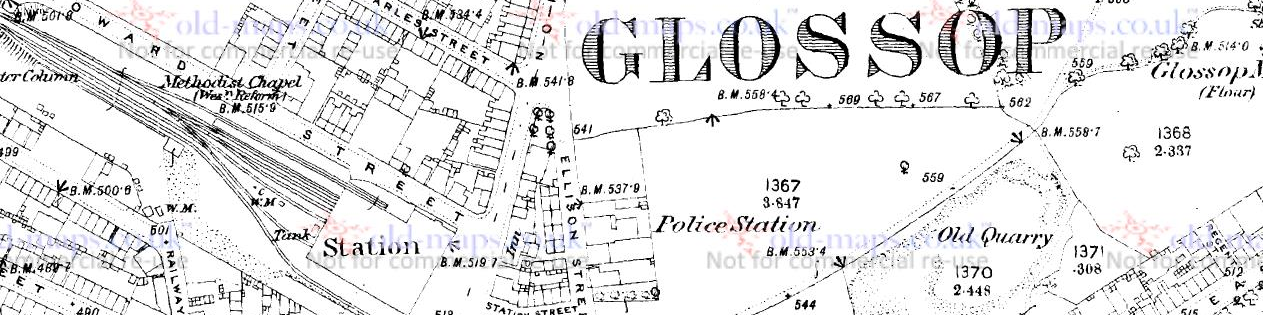
I was walking toward Manor Park the other day, down Crosse Cliffe and then along Milltown past the old Volcrepe buildings (well, the remaining one at least) and toward the Prince of Wales. This area is chock full of interesting historical bits and pieces, some of which I’ll share in later posts. But for now, I present an oddity and a mystery, both of which caught my eye, and which I’d like to share.
First, the oddity.
The derelict Volcrepe buildings, now partly demolished and missing its iron walkway, was a Glossop landmark. Huge and abandoned, they loomed large and formed a stone canyon down which one walked in order to get to the town centre from Cliffe Road. Spooky at night… and day, as it happens!
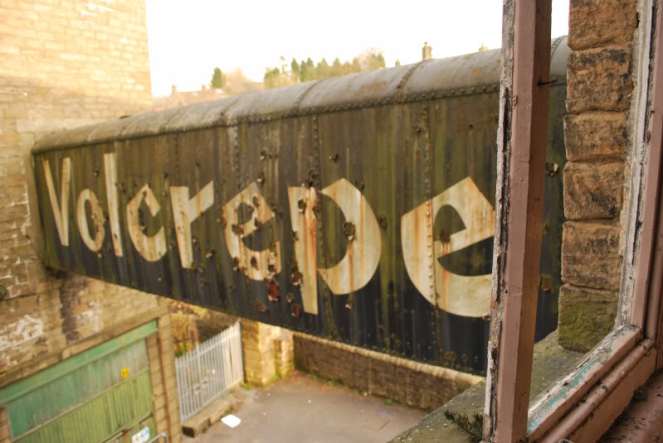
It is now massively reduced in size, with only the eastern building remaining, the massive western side having made way for housing and Lidl. Alas… progress!
Walking along, pushing the pram, I noticed a bricked up doorway. Nothing wrong with that, the buildings are 150 years old, and doors and windows fall in and out of use. It was what it was bricked up with that puzzled me! London Stock Brick – the yellow brick that was favoured in London buildings during the 19th century and until the early 20th Century.
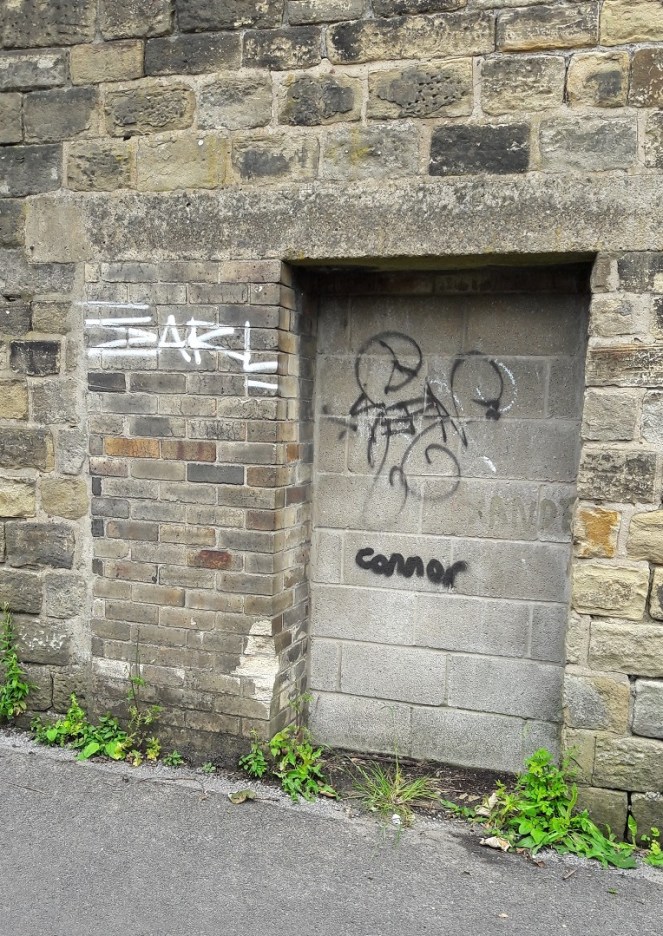
It is found all over the greater London area, but particularly in the East End, and is very distinctive – bright yellow, but quite soft – the product of the brickyards of Kent, Sussex, and the inner London areas. It is very recognisable, and a walk along Brick Lane – no pun intended – will show you just how common it is in that area (more details here, or search for photographic examples).
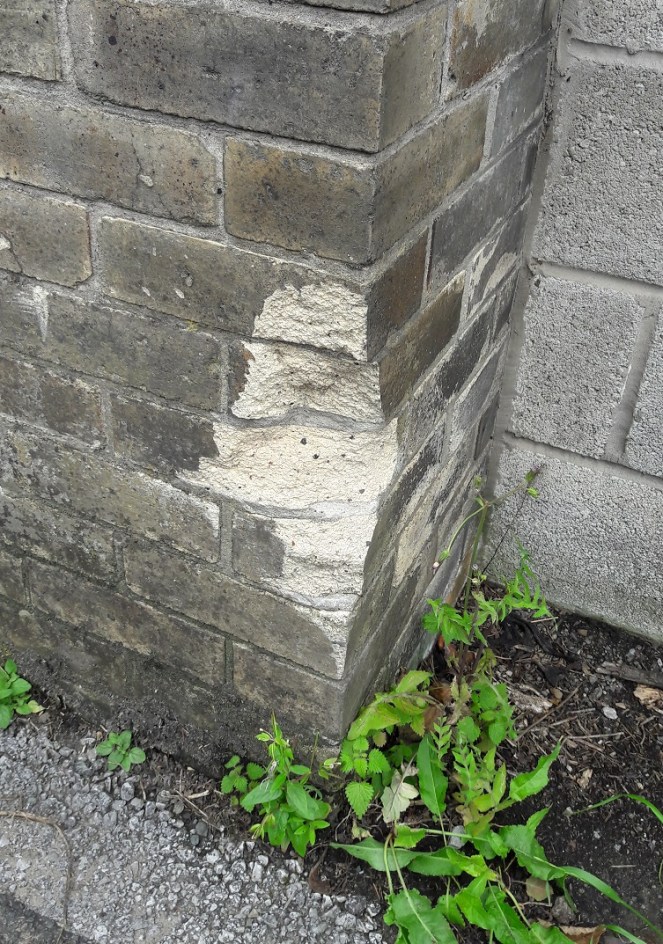
How and why it ended up here, in Derbyshire, being used to block up a doorway, I have no clue. An oddity, as I say!
Now the mystery…
A little further along the road, and on the same side, toward the end of the wall of the Volcrepe factory, a square block caught my eye.
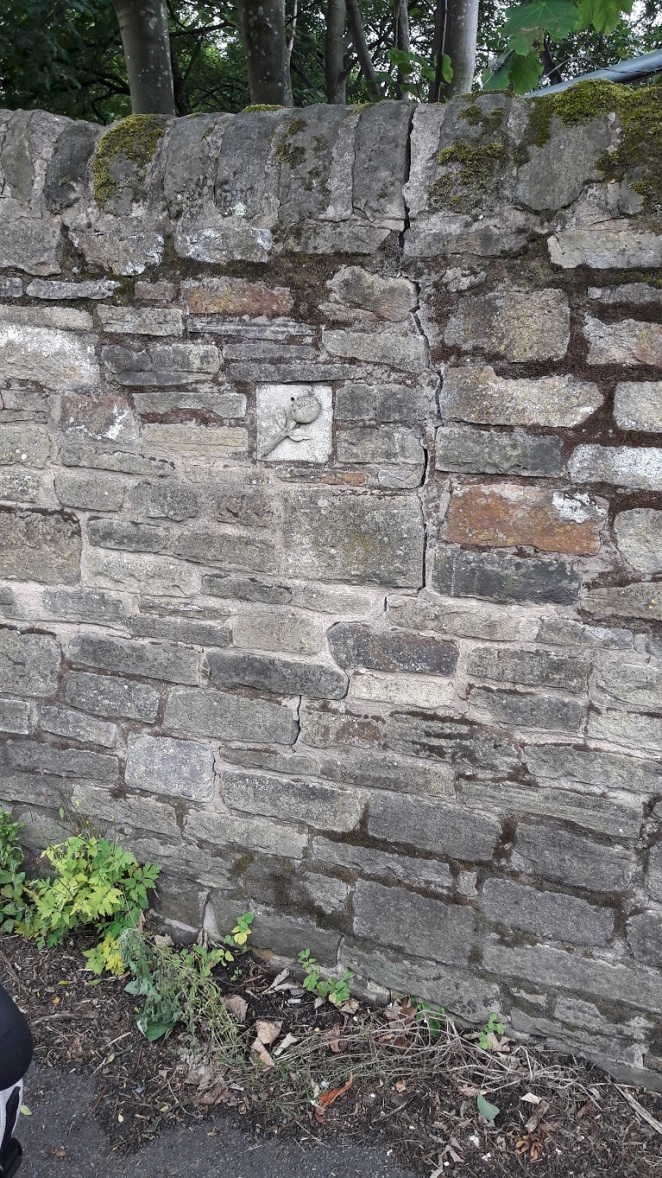
Distinct from the rest of the wall, I approached, and was amazed.
Behold… a tulip!
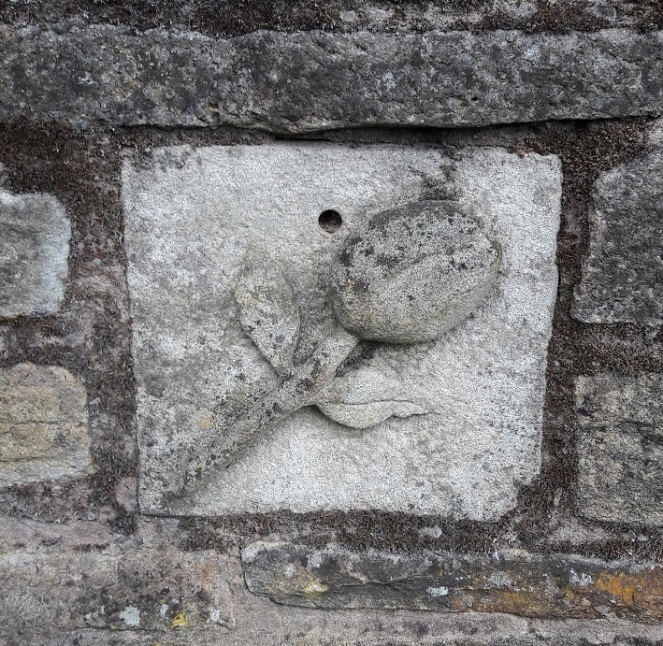
Delicately carved in stone, a carefully cemented into the wall, the flower sits. It was clearly placed into the wall when the wall was built, and is not a later intrusion – you can see that it fits perfectly and deliberately, and none of the stones are cut to allow it to fit in. I don’t think the wall is the same age as the rest of the building, as it seems a little too ramshackle when compared to the wall of the factory, and there are bricks included in the matrix. But it still raises the question of why was the stone placed there, and by whom. And what is the significance of the tulip? Also, it’s such an odd place to put it – not above or near a door, or next to a window or other feature, it’s almost like it was found and cemented in place. And what is the purpose of the surely deliberate hole placed centrally above the flower?
A mystery!
If anyone has any thoughts or comments, please drop me a line or leave a comment below as I would love to know what and why!

 The Glossop Cabinet of Curiosities