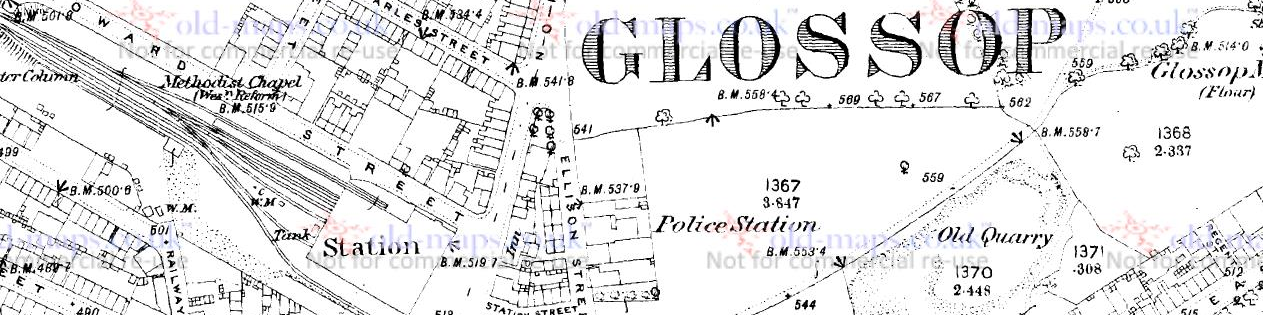
What ho, kind and gentle folk of the Glossop-based blog reading world!
Firstly, please accept my apologies for the lack of activity on the blog as of late. I have been surprisingly busy in both my work life and my actual life, and have somewhat neglected the blog, which is frankly not on. I will atone for my sins by posting twice this month – this post, and another part of the “Guide To Pottery”. (What’s that…? Hmm? Look, it’s no use shouting “Dear God, spare us the pottery“, and no, I won’t “curl my hair with it“, thank you very much. No one is forcing you to read the blog, you know. Honestly, the nerve of some people.)
There is all sorts of exciting blog related news, more about which soon, but for now on with the show, so to speak.
As regular readers will know I do love a good carved stone or two, and from graffiti to bench marks, I am always interested. However, one category of carving in particular holds a fascination for me, and that is the mason’s mark. I have blogged about them previously, and regularly post them on Twitter when I see them around and about, as there is something about them I find captivating.
Briefly, mason’s marks are the unique signature of an individual stonemason, made using a chisel onto the stone they had finished carving or shaping. The reason for this was ostensibly two-fold. Firstly, the stonemason was hired on a piecework basis – he was paid for each stone he finished, so it was important that ownership was established.
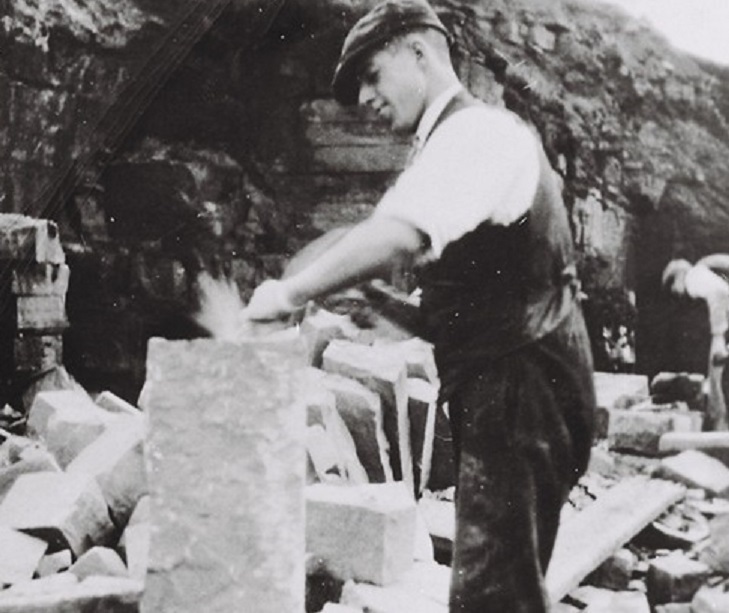

Secondly, it acted as a form of quality control; each stone was inspected and finished by the mason, with any flaws or issues noted, their reputation, and thus livelihood, being based on their work. It also meant that substandard work could be traced to an individual. But beyond this, I suspect also that making their mark was important to the masons themselves – a sense of pride in their work, to be able to stand back and say “I made that”, and being able to point it out to their children or grandchildren. It gave a sense of agency to the stonemason, allowing them ownership in both senses, and making them feel as an individual, rather than simply a cog in a much larger machine. This is a hugely important point, and the reason for my fascination with them: these are the personal signatures of the men who carved those stones, men who almost certainly couldn’t read, and most of whom couldn’t sign their name beyond an ‘X’. Indeed, it is entirely likely that, sub-contracted by a foreman, their names wouldn’t be recorded elsewhere either. Thus, these simple geometric shapes are all that remains of the men who built Dinting Arches, testament to their skill and backbreaking labour; this is them signing their work in the way an author does their book, or an artist does a painting. The silent stones speak for them.
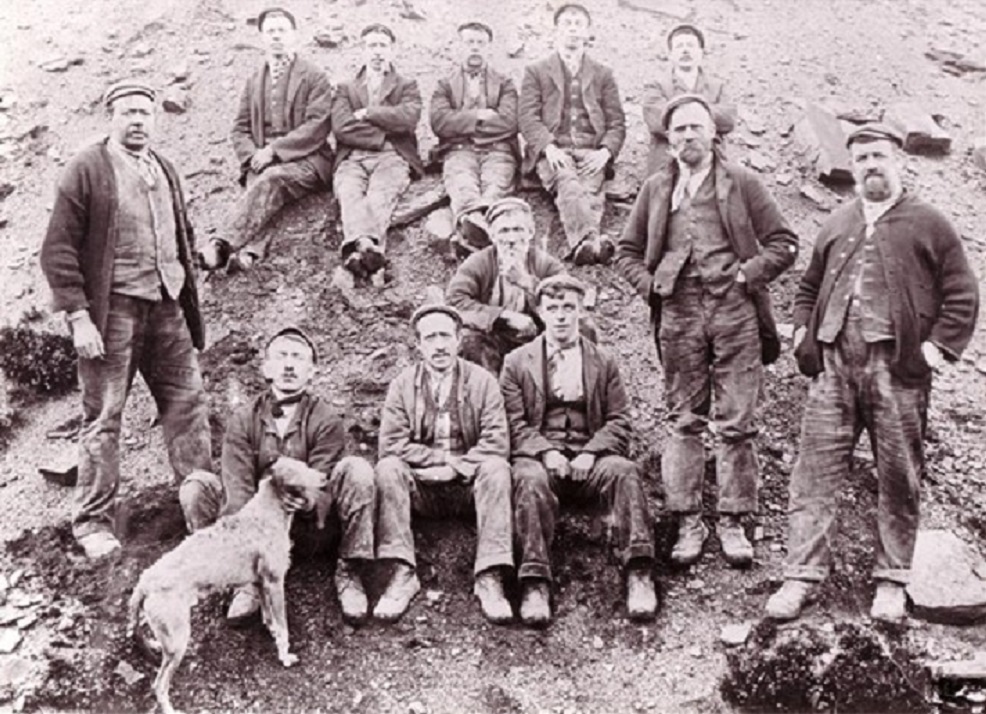
Because I am that kind of person, I have a larger project in mind. Between 1841 and 1847 (ish) the line between Broadbottom and the Woodhead Tunnel, and including the branch line to Glossop, was completed. A massive undertaking, costing enormous amounts of money, and involving huge numbers of men, in that 6 year period, millions of tonnes of stone would have been blasted, shaped, finished, transported, and fitted into place. At some stage, most of the stone would have a mason’s mark put onto it. Not all survive – they might be placed with the mark facing inside the construction, or it might have been removed during the final finishing once the stone was in place. However, dotted around the railway lines – the bridges, underpasses, tunnels, retaining walls, as well as the two viaducts – some marks are still visible. I thought it might be a fun* – and worthy – thing to do to survey all the remaining railway stonework to see what is there, and to make a note of the mason’s marks before they disappear, and the lives of the men with them. We could also see how many match at different points along the track, indicating that the same men were working in different locations. I’d also like to see if any records exist of the men – quarrymen, rough shapers, or finishers – and see if it would be possible to put a name to a mark. Highly unlikely, I know, but you never know.
(* yes, I am painfully aware that ‘fun’ is a very subjective concept… as is Mrs Hamnett)
One has to start somewhere, and so I thought I’d give Dinting Viaduct a go.

The technique is relatively simple; using eyes and binoculars, I surveyed all the stone I could see, taking a drawing of all the different marks I could make out, and taking photographs, where possible, of good examples of marks (I need to go back and highlight some in chalk). This is not rocket science, or indeed any kind of science, it’s a bloke with some binoculars and notebook. I compiled all the data, numbered each mark, uploaded the photographs, et voila… you are reading the result. Please enjoy. Or don’t, as you wish.
Some broad observations. By and large, the marks are placed centrally in the stone block, only occasionally toward the edges. It seems that only the more ‘natural’ looking blocks contain a mark, and particularly those on the lower courses. The other blocks seem to have been roughly dressed, a process which may have removed a mark, were one present. As expected, the marks are largely constructed from straight lines, with marks D1, D19, and D23 being the exceptions – straight edges are easy to carve, circles less so. The execution of the carving is often poor, with little precision shown – one wonders if they were done with speed before moving on to the next stone, after all, time is money for these men. It must also be remembered that, talented though they undoubtedly were, it is unlikely that these were the fine master-craftsmen who were carving scrollwork and lettering. Rather, they were focused on shaping the stone – accurately and with skill – so that it would fit.
So then, these are the marks, and in a sense these are the men. It is important to note that I have not included inverted example as separate – for example, mark D5 occurs both with 2 points up and with 1 point up, but as the mark was carved prior to it being installed, which way up it is depends entirely on which way up the stone was installed. Conversely, marks D1 and D19 might be the same stonemason’s mark, but the fact that D18 is off-centre in that the lines aren’t paralell to the rectangular edges as they are in D1, suggests they are two different men (unless he was carving it at an angle). It is also possible that some of the different marks noted here are actually the same mark which has been worn or damaged, leaving only the partial mark that I have transcribed – D6, D9, D13, and D15 for example.
So then, what did I see? A selection…


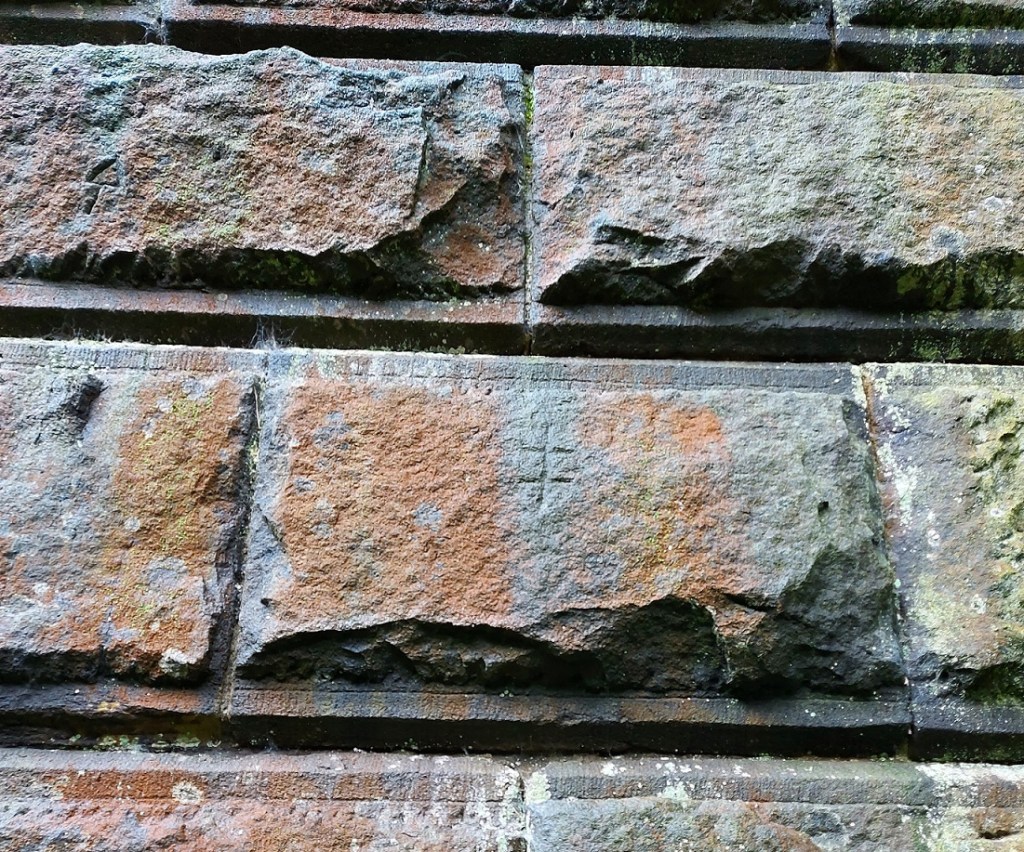


I could go on, but you get the picture. The whole of Dinting Arches are covered in mason’s marks, and it is well worth a trip down – it’s a fascinating bit of architecture, and of Glossop’s history. Below is the page of marks in my notebook, and I feel certain more are waiting to be discovered.

I will move on to another section of the railway soon, and if anyone fancies joining me, drop me a line – many hands make light work! I’ll post the results, and see if we have any matches.
Right ho, another post soon… I promise. Until then, look after yourselves and each other, and I remain,
Your humble servant.
RH

 The Glossop Cabinet of Curiosities
Very interesting article about the somewhat anonymous builders.
I wonder if somewhere there are records of the masons involved.
History is so often recorded from the top down it’s refreshing to see
articles like this. Thank you !
LikeLike
Great stuff. I’m in the caravan at Crowden Saturday 14th. If you are out and about, there’s supposed to have been a lot of Roman finds between the campsite and the reservoir 😉
LikeLike