Wells · Whitfield

A Furtive Furtle Around Freetown

I do love a good bit of alliteration.

What ho! What ho! What ho! Here is another post, as promised. This one is something of a hash, with multiple elements sharing the theme of Freetown (the road in Whitfield, not the capital of Sierra Leone, just in case you are here by mistake), and all presented in the style of a thriller novel. Enjoy.

The House(s) of Horror

I was perusing my namesake’s History of Glossop the other day, and came across this:

Freetown is really part of Hollincross Road (now Lane); it was called Freetown on account of the land being mostly freehold. The oldest house is no 28 built in 1809 and long owned and occupied by Robert Bennett. The chief rent was sold 29th June 1891 to Mrs. Wood for £52 who also bought the chief rents of the Unity Street property. No 28 was sold 16th January 1893 to Ald B. Furniss for £445, it has an outdoor licence attached to it.
The late Mrs. Sarah Hargreaves of Hadfield Street, remembered Freetown when this house was the only house in the road. On each side were hedges right down to Pikes Farm. The next houses to be built were Nos. 36 and 36a, in 1830 by Peter Handford, better known as “Peter before the Shower.” Many houses were built in 1835 and 1836 but the majority now existing were built during the last 60 years.

I live just by Freetown, and as I walk up and down it at least 8 times a week dropping off and picking up Master Hamnett from school, I have become very familiar with it.
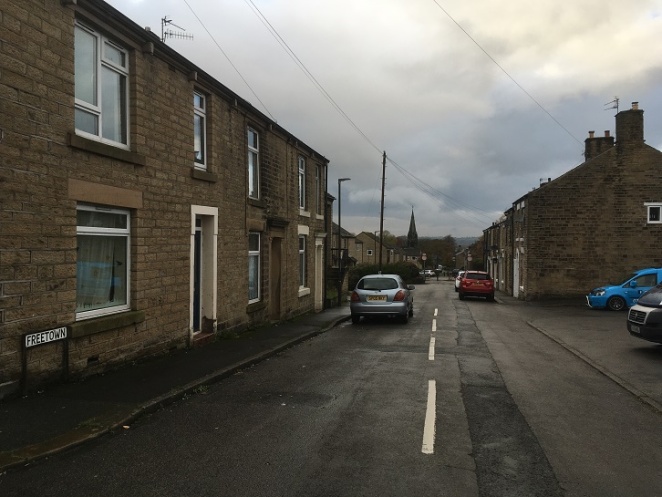
Fr9
Freetown, looking west toward St James’s church.

It really is quite an interesting place; 1860’s housing cheek by jowl with 1960’s housing, and where widespread ‘remodelling’ in the 1960’s destroyed the homogeneity of the Victorian stone built heart of Whitfield. A shame really. I have mentioned bits around Freetown before (here, for example), and I’d really like to do a longer piece, particularly on Whitfield recreation ground (the park), but for now, I’ll keep this brief(ish)!

Anyway, the article got me wondering… and wandering. Are these old houses still in existence, and what else is interesting here in the Freetown area.

Well, the first part of the question was easily answered.

No.

The council pulled them down in the 1960’s. With no thought to heritage or the past in any form. I am constantly amazed and appalled at the shortsightedness of councils in the 1960’s – no effort was made to preserve, only to destroy and rebuild in a ‘better’ way. This thinking has had so many effects in the present day, not least of which is the destruction of close-knit multi-generational communities in Manchester in the name of ‘slum clearances’. I can angrily rant and rave about this all day, so I’ll move on.

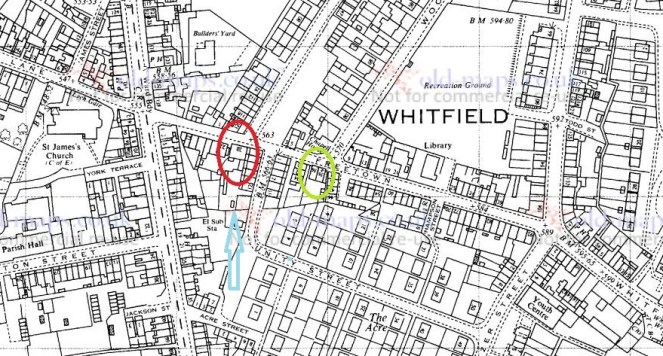
Number 28 is marked in red, 36 and 36a is marked in green. Ignore the blue arrow for now… we shall return to it.
Fr1
This is the 1968 1:2500 map, just before they were demolished.

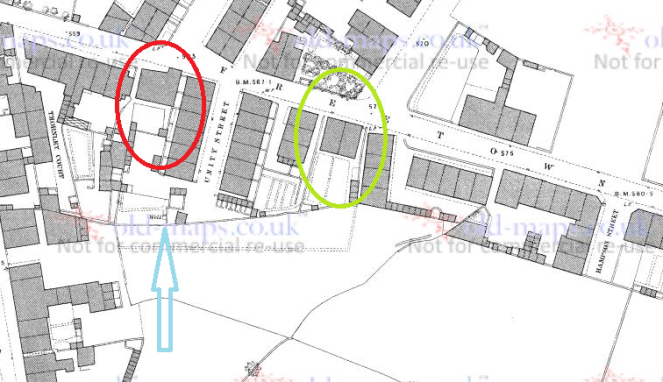
What is interesting is that the roads Wood Street and Kershaw Street seem to have been aimed at them, almost as though the town planners were using these early buildings as reference points – which they almost certainly were. Kershaw Street (begun in 1834) runs from Bank Street to Number 28, and Wood Street (in 1913 was still under construction, though there as a track prior to that) runs from the opening toward St Mary’s School (and the allotments) off Gladstone Street to Number 36 and 36a. Here are the buildings in 1880, in much better focus.
Fr2
The 1880 1:500 scale… much clearer. And once again ignore the blue arrow… nothing to see here.

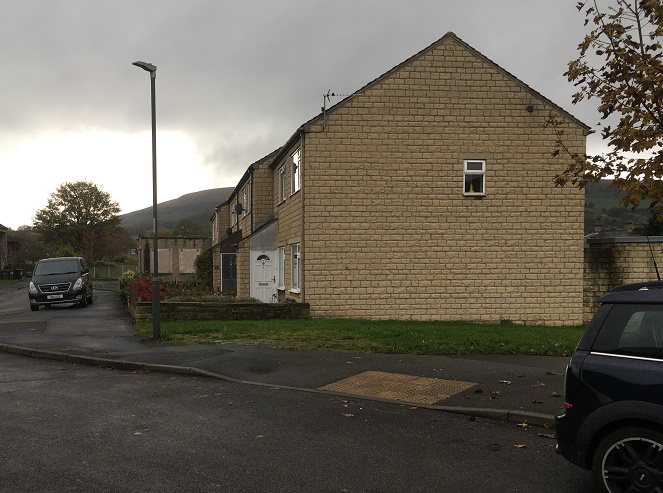
28 (red circle) seems to have been a large, oddly shaped, affair, and probably quite Georgian looking, with a central doorway and large windows. Actually, I’m amazed no photographs exist of 28 prior to its demolition – I should peruse the Glossop Heritage Trust archive for some – you never know what might be lurking. Here is what it looks like now:
Fr4
The location of 28 Freetown, the oldest building in the area.

Number 28 would have occupied some of the same space as the building there now, and to the right, but would also have come up to the edge of the path, where the grass is. It’s nice to know that at least some of the footings and foundations will be preserved below ground, and it makes you wonder at the sort of pottery and bits that lurk in the garden there… Given how busy Freetown and area is, and how many houses are here, it’s hard to picture what it would have been like as Sarah Hargreaves remembered it, with this being the only house from here to Pikes Farm – amazing.

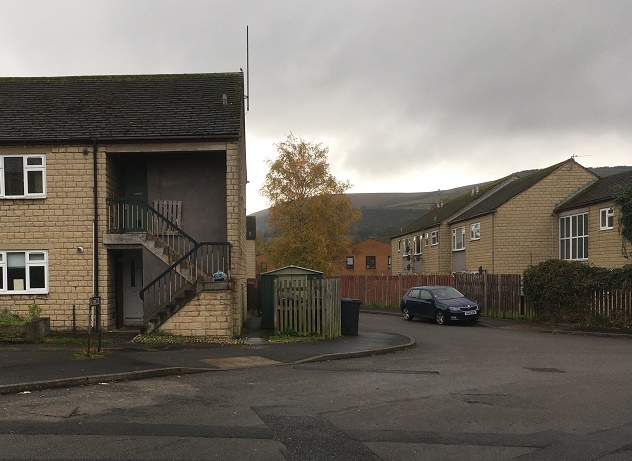
Numbers 36 and 36a (in green) were semi-detached (well, terraced) stone built affairs, probably very similar in design and style to many of the other houses built around the same time in the area. I love the nickname given to the builder, Peter Handford – ‘Peter Before The Shower’ – what on earth could it mean? Any thoughts, anyone?

Anyway, here is what is there now:
Fr5
The modern view, Whitley Nab in the background.

Numbers 36 and 36a stood broadly where the right side of the current building is, the shed, and out into the road – in a sense, the centre of the photograph.

So there we have it… a loss of history, sadly. I wonder if the people who live there now know what they are living on (if you are reading this, can I have a poke around your garden?).

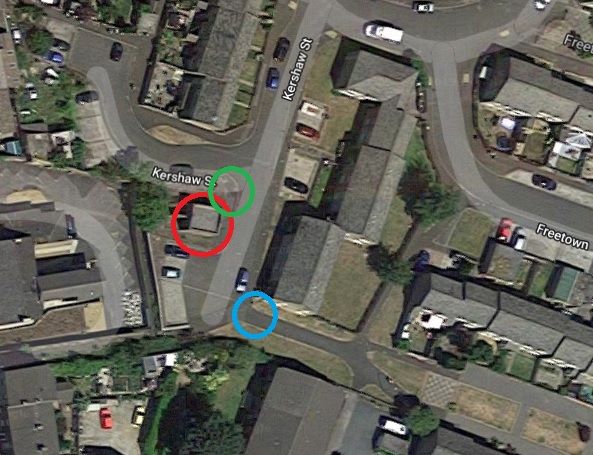
The next three parts of this post are all based around this small area, so we’ll skip to an aerial photograph of the place, with each area marked in coloured circles. All will become clear in a moment, don’t worry!
Fr7
It’s all getting a bit ‘Olympic-y’ around here now.

The Blue Arrow

So, that blue arrow! whilst I was sorting that lot out, and doing some map work, I came across mention of a well (check out the blue arrows in the above maps, you can see it). A well would have been important to the people of Whitfield, as they always had issues with the water supply in the area (this is a whole other blog post, we’ll save it for another day). The word ‘well’ implies a reliable water source, and importantly, some form of structure associated with it – even if only a trough. Indeed the 1880 1:500 map (above) shows just such a structure, with the well placed against what seems to be a wall. I had high hopes of finding something.

Alas, ’twas not to be. There is quite literally nothing even remotely old about any of the area where the well once stood – it has all been remodelled. Here is the location of the well as marked on the map:
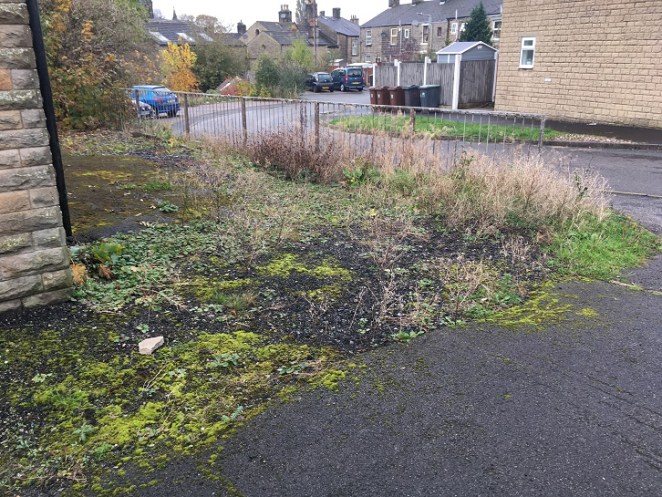
fr13
This place is circled in green in the aerial photograph above.

I would think it would be difficult to destroy a well completely – it is flowing water after all, and if you stop it up, it will just bubble elsewhere. This, coupled with the fact that it is not marked on any map past 1880 suggests that it might have simply dried up. Oh well.

The Electrifying Edifice

So, right next to the well location (and circled in red) is this:
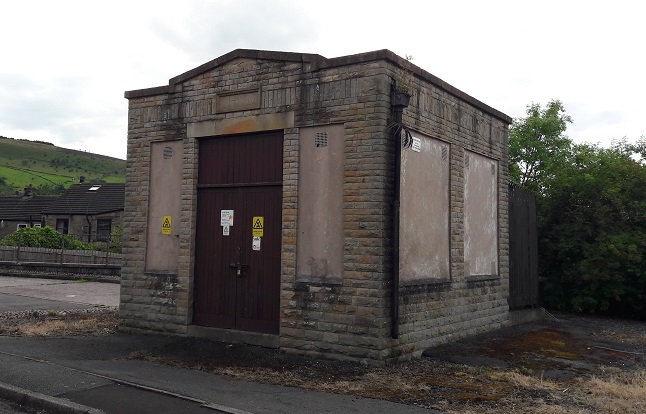
Fr6

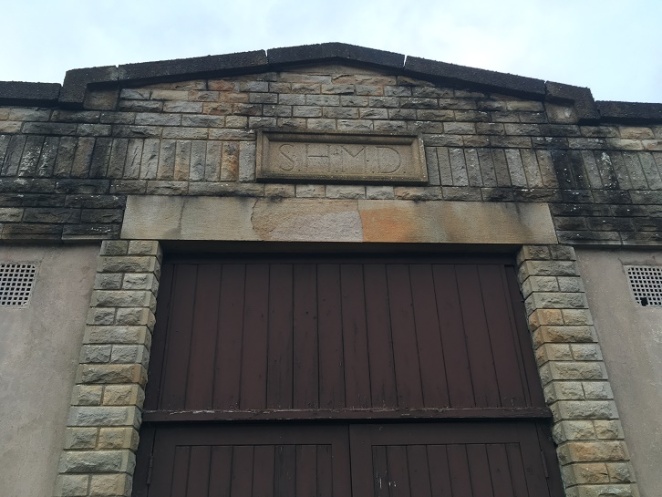
A vaguely classical temple looking electricity substation, sitting seemingly on its own in the wilderness of this part of Kershaw Street – it’s all a bit spooky, and I have the sneaking suspicion that the ‘Danger of Death’ notices refer not to the electricity, but something that lives inside it. It’s probably 1920’s or 1930’s in date, and clearly supplied power to the area, and indeed still does, quite remarkably surviving the 1960’s demolition. Above the doorway is a lintel with the letters ‘SHMD’ carved into it – a sure sign of its age, as it would just be a plastic sign now.
fr11
The Stalybridge, Hyde, Mossley and Dukinfield Tramway and Electricity Board

A brief search on the internet reveals that it refers to the “Stalybridge, Hyde, Mossley & Dukinfield Tramways & Electricity Board”. They have an interesting history in this area (which you can read about here and here), but briefly they were founded in 1901, supplied electricity to the named places (and Glossop), as well as running bus services and trams, and eventually became part of Norweb in 1948. So there you go.

The Mystery of The Disappearing Gatepost

As I was navigating the streets via Google maps, trying to work out where the well was, I spotted something interesting at the very bottom of the continuation of Kershaw Street, at the left hand (easterly) turn along a pedestrianised track (circled in blue in the above aerial photograph).
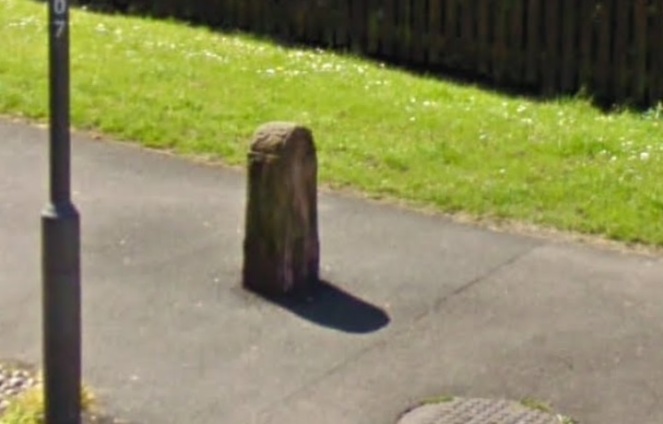
Fr3
Carved, and covered in paint, it stands guard.

It looked to me like a very out of place gatepost, reused as a bollard to prevent ne’er-do-wells riding motorbikes and cars along the pedestrianised bit. You can even make out the carved shoulders, making it reminiscent of a milestone (and here). It is certainly jarring against the 1960’s concrete that is used in this area. Interesting, thought I.

So off I popped to have a look.

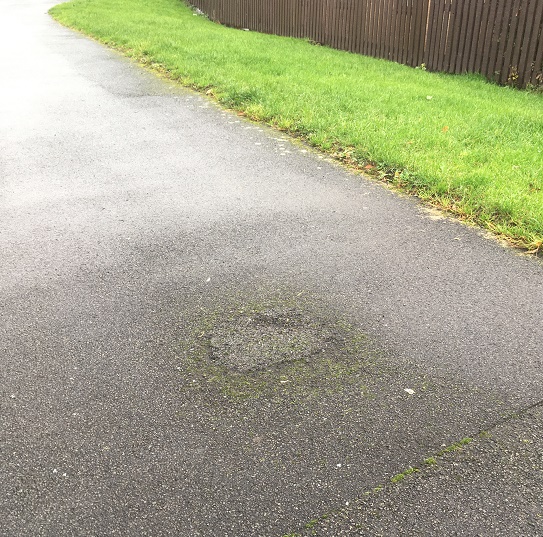
Nope. Nothing. Just a tarmacked hole in the ground where once it stood.
Fr10
A patch of tarmac is all that remains.

I had a look around in hedgebacks and ditches, but found nothing. Something has happened to it since May 2009 when the Google streetview image was taken… but what? Now, nobody has stolen it, clearly – it would weigh a serious amount. And if the council took it away, then why? It’s all a bit of a mystery; if anyone knows anything, then please drop me a line.

The Nailbiting Conclusion

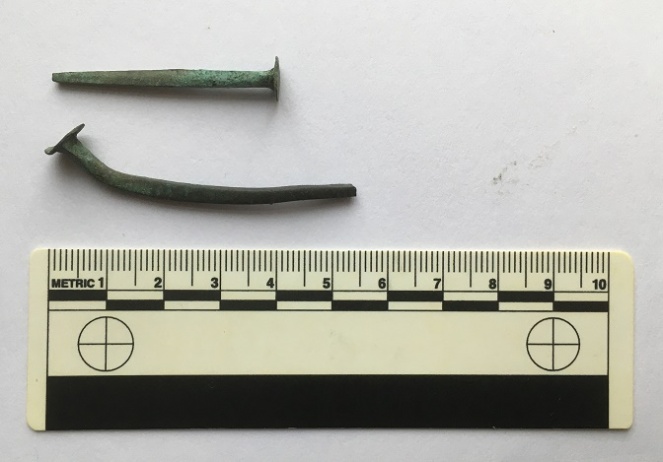
And to end with, some archaeology. As I’m sure you know, I like to pick up interesting things that I find (I can hear Mrs Hamnett sighing in agreement). Now, within the space of a single week, I picked up two copper nails from Freetown; one at the upper end, and another at the lower, nearest St James’ church. I love these things – such history in a tiny object – and I’ve blogged about them before, here. And have also come across them elsewhere in Glossop.
Fr8
I love these things.

I always have my eyes on the ground (to the point I am worried about developing a stoop!), but to find two in a week seems oddly lucky… perhaps I should play the lottery. Or has my luck been ‘used up’ on worthless copper nails? Anyway, keep looking people, and get in contact with anything you find.

Right-ho, that’s about all I have at the moment. A bit of a hotch-potch, to be honest, but I hope entertaining, or at least diverting. If you have any comments about the blog post, or just in general about Glossop’s past, please feel free to email me. I have a lot more bits and pieces to blog about, and am trying to better manage my time, so hopefully I’ll have something more to you in the next week or so. Until then, I remain.

Your humble servant,

RH

Archaeology · Wells

Some Lost Mottram Wells – An Update

A while ago I posted a blog entry about some named wells in the Mottram area.
Read the post here to refresh your memory, it’ll help with what follows.

We were facing a slight conundrum. The issue was that there was the two wells in the one field – neither of which was really visible on the ground – coupled with the fact that one of them was called Boulder Well, a very specific place-name, despite there being no associated boulder. Oh, and there was a boulder in a different field, but with no associated well. Well, I think I have found out what it all means. Probably.

The map, first of all.

Well 1
The two named wells are in the bottom circle, marked with a ‘2’. The boulder in the original blog post is in the upper circle, roughly where the tree is on field boundary. 

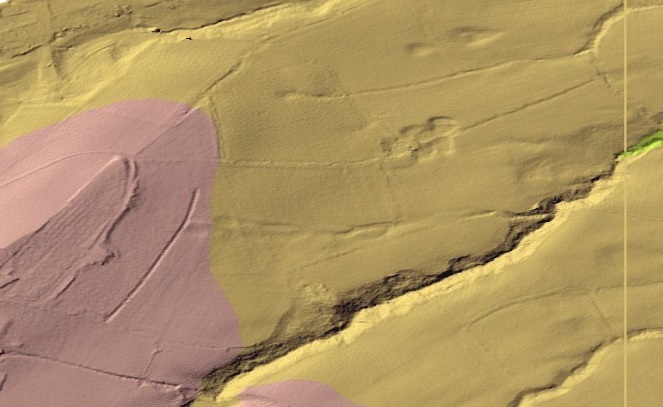
I was looking over some Lidar images of the area, and noticed something interesting. For those of you who don’t know, Lidar is a method of using light (laser) to map the ground surface, allowing for a greater contouring of the ground, and revealing every single bump and dip on the surface. Quite literally, everything – it simply strips away trees and vegetation. It’s application as an archaeological tool is enormous, and it allows us to not just identify, but to map, record, and categorise all sorts of things that are invisible on the ground.

Like old wells, for example.

So, using the government’s Lidar website (highly recommended, by the way),  this is what I saw.

Lidar 1
Despite being a mass of lumps and bumps, this is broadly the same area as the map above.

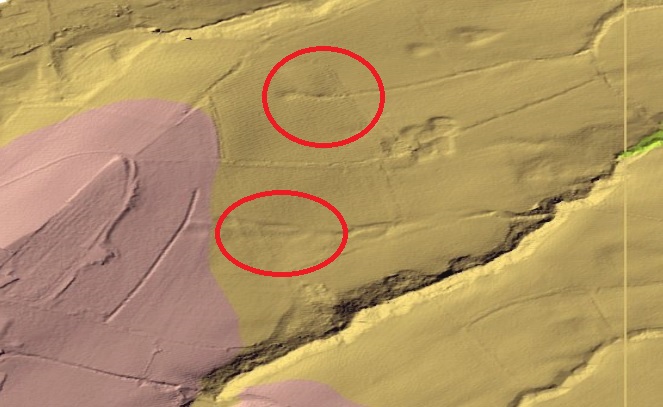
To help you identify the area better, here is the same image with the red circles on it.

Lidar 2
The upper circle is where the boulder is, the lower is where the two wells are on the map. 

What the image shows is that where the two wells are recorded on the map – Grave Well and Boulder Well – there is only the remains of a single feature. You can see the line of the waterway moving from left to right, passing through the lower circle, and eventually draining into the small valley there. Single feature, a single well. Not the two wells recorded on the map.

Now look again at the upper circle. The field boundary where the boulder is can just be made out, but to the right, precisely where there is a ‘trough’ marked on the map, is a spring head, and you can see the drain, running east and again emptying into a small valley. There IS a well there, it’s just that you can’t see it on the ground.

Looking again at the map, we can see only one well place or structure in the lower circle. This, I humbly submit, is Grave Well, not Boulder Well – its location right next to the graveyard is the clue. Boulder Well is situated in the upper circle, next to… yup, you guessed correctly, the boulder, and the trough marked the place where the spring issued forth. This makes sense.

I am convinced, then, I have rediscovered the location of Boulder Well.

All this is clear on the Lidar, but as I say, cannot be seen on the ground. It also means that the OS people made a small mistake in naming the wells – but then if a local says “yes, Boulder Well is just above Grave Well”, how literally are you to take them?

I need to go back and take some more photographs.

So there you have it. As Bertie Wooster was fond of saying “The lark’s on the wing, the snail’s on the thorn, God’s in His heaven. All’s right with the world!”.

Comments and discussions, even arguments against the newly rediscovered well will all be gratefully received. Also, I have a few more blog posts that are about to be published, so keep your eye open.

As always, I remain your humble servant.

RH

Archaeology · Wells

Some Lost Mottram Wells

I thought I’d venture a little farther afield this week. The blog is intended to explore Glossop’s heritage, but I feel that if I can see it from Glossop, I should be allowed to blog about it… even if it is in another county.

But don’t worry, we won’t be going to Yorkshire!

St Michael and All Angels church in Mottram dominates this end of Longdendale – it is visible from all sorts of angles, disappearing as you travel various roads and paths, only to pop up unexpectedly from behind buildings or between trees. Indeed, it’s presence keeps watch over the valley, almost as a reminder that the church watches over the people. In fact, I can see it from James’ window, on the distant brow.

Mottram Wells - Church
St Michael and All Angels, Mottram. Photograph by Stephen Burton.

It sits on a prominence called War Hill (from the Middle English Quarrelle, meaning quarry), and is a particularly bleak place, catching all the wind that roars down Longdendale from the moors. The church itself, though severely ‘improved’ during the Victorian period (read, monkeyed around with and partly rebuilt) is still at its heart essentially late medieval in date – mid 15th Century or so. Going further back, it may well have been the site of Saxon church prior to that. Travelling even further, there is evidence in the form of cropmarks that it might have been the site of a Roman signal station connected to Melandra – a perfect place with commanding views up and down Longdendale. Prior even to that, particularly given its prominent location in the landscape, it must surely have been attractive in prehistory, though there is no evidence at present.

As an interesting aside, during the late 17th Century a whole pile of my ancestors, the Williamsons, were ‘hatched, matched, and dispatched’ here (that is, they were baptised, married and buried). The Williamson family married into the Sidebottom family who were fairly big in this area, were important in the early Industrial period, and were consequently quite wealthy. Alas, my line gradually becomes poorer, and we end up in East Manchester working in a mill, rather than owning it.

Mottram Wells - Williamson
Signature of John Williamson, my great, great. great, great, great, great, great grandfather, born in 1678 in Mottram, and who married Elizabeth Sidebottom on 15th February 1703 in Mottram Church… exactly 315 years to the day, today, coincidentally, and rather spookily.  I will raise a glass to them whilst looking at the church as soon as I have published this post!

Perusing the old OS maps of the area, as I am wont to do (here), I noticed three wells in the immediate vicinity. Now, nothing unusual there, the whole area is teeming with them as we live in an area with a high number of springs. However, what was unusual is that all three, very close together, were named. Normally, a well is simply marked ‘well‘ on an OS map, but the fact that these have names could indicate that there may be more to them. And what names they are – Daniel Well, Grave Well, and Boulder Well – names that conjured up wonderful images. Well, well, well, I thought, this must be worth an investigation.

Mottram Wells - Map
The three wells, Daniel, Grave, and Boulder, are outlined in Red. Mottram church is outlined in green in order to get your bearings. This is from the 1886 1:2500 OS map. Note also the Coal Shaft and Mottram Colliery marked – the area has a very low quality coal seam running through it that was sporadically mined in the 18th and 19th centuries.

And so it was.

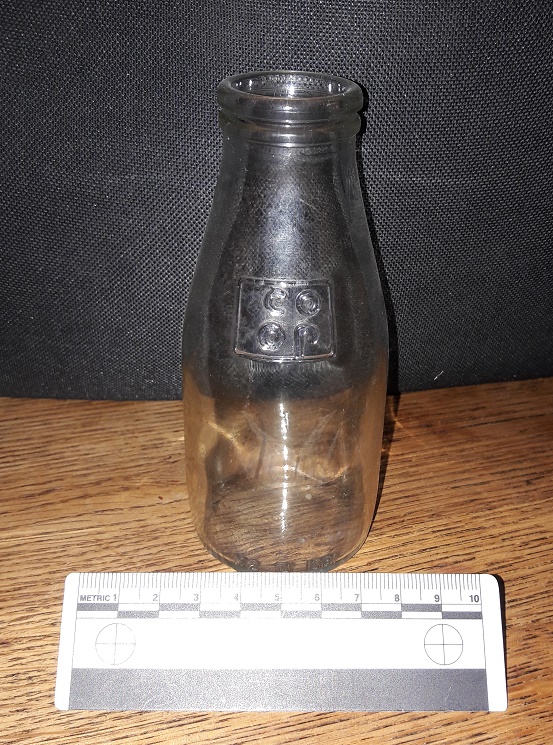
Daniel Well is situated on the left, northern, side of a track that comes from War Hill along the side of the school, and downhill to a pond. Interestingly, the only artefactual evidence from this exploration came from this first part of the track, just behind the school playground.

Mottram Wells - Bottle
1/3 pint of Co-Op school milk in a squat bottle. This really is a nostalgic trip!

I am just about old enough to remember free school milk, and these are the bottles they came in… It has been over 30 years since I touched one of these last, and the feeling was one of immediate nostalgia and a weird sense of happiness. Silver foil top and a blue plastic straw… I was back in Bradshaw Hall Infants School, just like it was yesterday! What I love about this artefact is that the only way it could have ended up on the track behind the playground is if some naughty child threw it over the fence… if you put it to your ear, I swear I can hear the “vip, vip, vip” sound of Parka coats rubbing together and the cries of “go on, I dare you… chuck it!”.

On to Daniel Well, then. The sunken path is muddy, but well constructed and was clearly used – I wondered if this was the main well for the area. My first sight of it seems to confirm that thought.

Mottram Wells - Daniel Well 1
Daniel Well, overgrown and unloved. Beyond is the playing field of Mottram School, and beyond that, Longdendale.

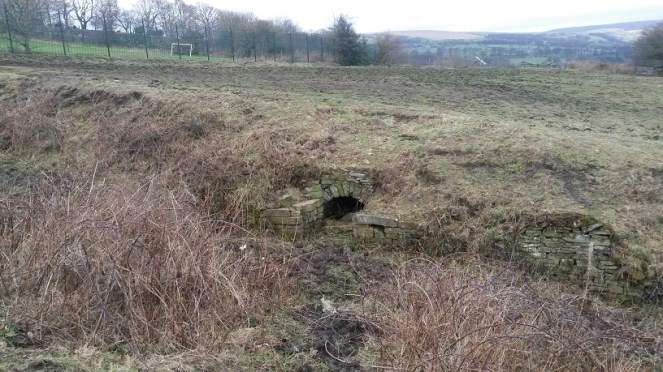
The path widens out at this point, and the stone built well head structure stands well built still. The path is very boggy, and although the well is overgrown and possibly relatively dry in terms of water within it, the spring that created the well is still flowing freely downhill.

Mottram Wells - Daniel Well 2
Close up of Daniel Well. Stone built arch, and side platforms upon which to put your buckets, bottles, etc.

The stone-built arch that is the front of the well goes back some three feet, although it is sadly now full of collapsed rubble. To me, this seems a sad end to what was one of the most vital aspects of the village – lives were, quite literally, saved with this water. Food, drink, laundry, baths, all came from this point. People who met drawing water here married in the church above, and had children. Gossip and community, focused on this place, and yet, no longer. I would love to see it restored, or just a little better cared for.

Following the path down, the water flows into this secluded and sheltered pond.

Mottram Wells - Pond
The pond from the end of the track. The water flowing into it from behind the camera comes from Daniel Well. It then flow out again through a channel to the left.

Clearly Daniel Well was an important well in the area – the path and the stone built well head attest to this. I have no idea about the name, though – possibly from a personal name of the person who owned the land? Something Biblical, maybe? Any thoughts, anyone? The 1954 1:10,00 sees the last mention of Daniel Well on an OS map, and clearly by that point it had ceased to be important as a water source. Sadly, I doubt anyone living nearby would know it was there now, or at least know that it had a name.

Making my way back up, I decided to look for the other two wells. I had studied Google maps before exploring, and took a while to work out the locations by superimposing the old map field boundaries onto the modern satellite image of the area.

Mottram Wells - Overlay2
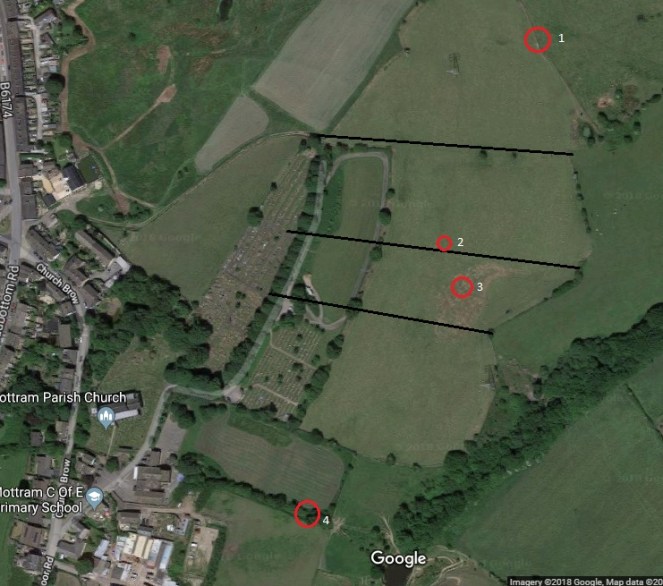
4 is Daniel Well, 3 is Grave Well, and 2 is Boulder Well. 1 becomes important in the discussion below. The black lines are the field boundaries shown in the 1886 map that are no longer there to help with orientation.

Alas, there is nothing left of Grave Well except a muddy patch in the field.

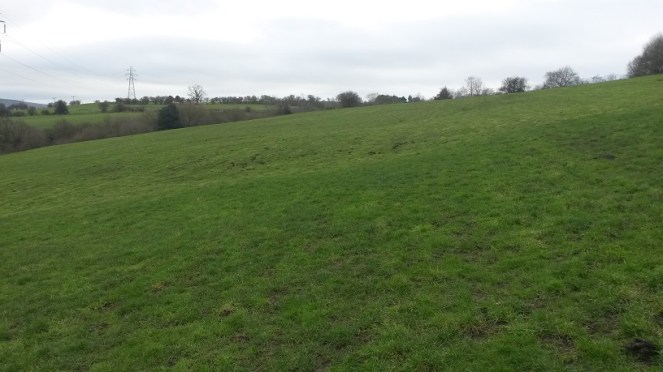
Mottram Well - Grave Well Site
The muddy area in the middle ground, in the slight dip, corresponds to the location of Grave Well. The ground was boggy and is clearly a spring of some sort. The view is looking south.

I am not sure what would have stood here originally – perhaps a structure like that at Daniel Well, but I feel this is unlikely: it is in the middle of the field, and with only a minor footpath to get to the well. No, I think it more likely that it was a simple affair that held some water where it bubbled from the spring underneath. I love the name, though – obviously derived from its proximity to the burial ground of the church, out of view to the right in the photograph. Either that, or it may recall the discovery of a burial in the immediate area. Either way, it does raise interesting questions about water tables and burials, though, and I’m not sure I would like to drink from Grave Well! Its last mention before it disappears into the veil of history is on the 1882 1:10,000 OS map. It clearly lost its importance, and was gradually forgotten about.

Pushing further on I looked for the Boulder Well and, when I found it, was similarly a little disappointed… at least at first, anyway. It was another muddy patch.

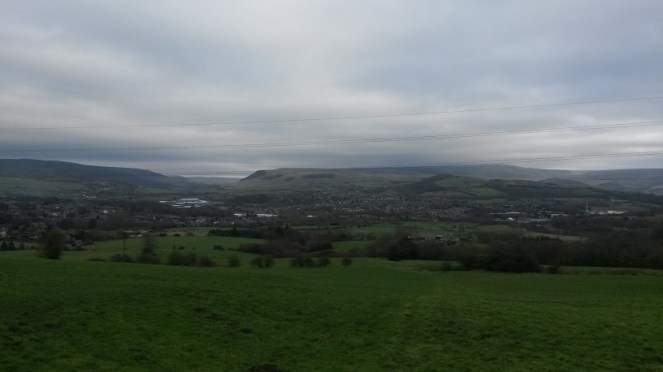
Mottram Wells - Boulder Well
The muddy patch in the left foreground corresponds to the location of Boulder Well on the map. The view from here, looking east, is incredible – Longdendale Valley at the left, Glossopdale at the right, and the hump of Mouselow just right of centre. Melandra is somewhere dead centre of the photograph. Despite it being dark, I am quite proud of this photograph.

As with Grave Well, I am not sure what would have stood here originally – probably nothing much. Also, in common with Grave Well, the last mention of it on the OS map is the 1882 1:10,000 map, after which it disappears, and is gone forever. The name intrigued me, though: Boulder Well is a very specific name, deriving from… well, one assumes… a boulder. The lack of boulder is, then, confusing, and a little disappointing.

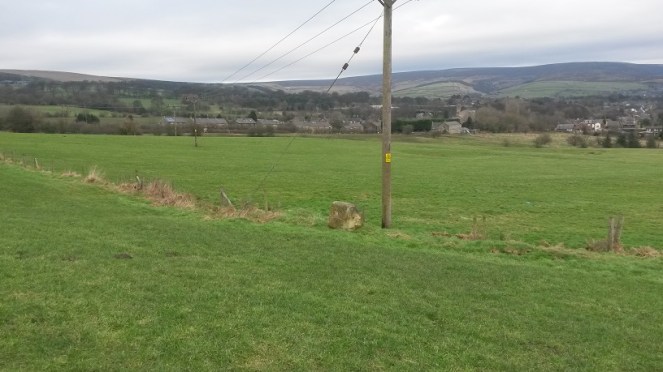
I pushed on regardless, to see what I could see. And lo! In the next field north, at the edge, there stood a bloody big boulder!

Mottram Wells - Boulder Well2
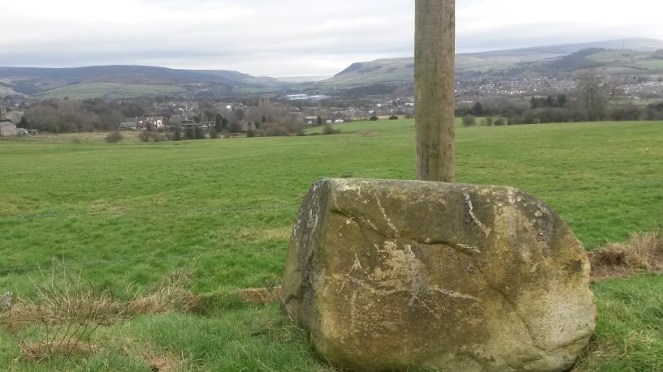
The boulder! Looking north. It is marked as point ‘1’ on the satellite map above.
Mottram Wells - Boulder Well3
Close up of the boulder. It is a glacial erratic of some sort, rounded and left behind by the retreating ice.

Now,  although it is in a different field, this must be the origin of the name Boulder Well. Indeed, it appears to have been moved ‘recently’ – it is sitting on top of the grass, rather than embedded in it. However, if it had been moved, this at least would explain why it is in a different field from the ‘well’, and why it now stands comfortably out of the way at the field boundary. I wonder when it was moved, and where it stood originally.

Mottram Wells - Boulder Well4
The boulder, with the Longdendale Valley behind it.

The fate of these wells is interesting, and is obviously tied to the introduction of clean piped drinking water directly into your home. We – and I am very guilty of this – have a tendency to romanticise the past, and a wish to remove the trappings of modern day living, to peel back all the ‘progress’ we have made, and to revert to a simpler way of life. I love the idea of having to walk to a well to draw pure cold water, it would be so… earthy, grounding, basic. Free and simple.
But then I have never done it in the rain, sleet, or snow, wearing ill fitting wooden clogs, wrapped in a basic cloth shirt, slipping down a muddy unmetalled path, after having worked 15 hours in a mill.
I may yearn for a less commercial, more simple life… but I don’t yearn for pneumonia.

Hope you enjoyed the jaunt around Mottram. I have a few more posts I’d like to do about various wells – they intrigue me – so watch this space.

As always, comments of any kind are most welcome.

RH