What ho, Glossop!
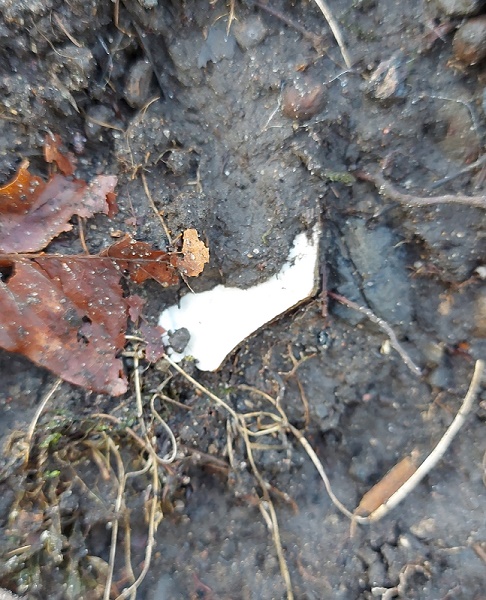
I was going to do another installment of the Pottery Guide, but one doesn’t want to over-egg the doodah, if you know what I mean… too much of a good thing can be a bad thing. So today’s quick post will be a visual record of a short mudlark I did at Harehills Park on the way to the shops the other day. A crisp and clear, but very cold, day, with a lovely winter sun for company, I noticed a piece of pottery gleaming white against the mud.

“Hell-lo!” I thought, and dove in lightning fast in case someone else beat me to it. You know how people are for pottery round here, you have to be quick, I can tell you. I once nearly lost an eye in a tussle with an old lady over a piece of feather-edged ware… knitting needles are ferocious weapons when wielded by the highly trained and woolly hatted. But I won the day, the sherd was mine… and I still wear one of the bounder’s ears on a chain around my neck as a memento. But I digress…
So, ninja-like, I pounced on the pottery. Victory!
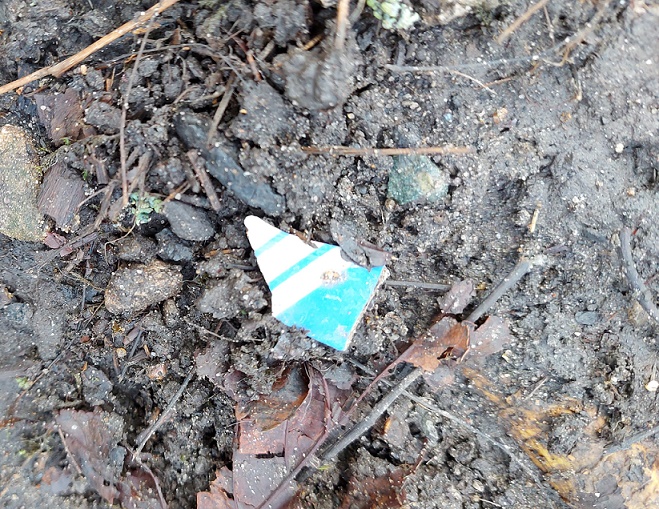
Ooh nice, a sherd of Annular Ware. Probably late Victorian in date, or even early 20th century, this stuff looks almost modern thanks to TG Green’s Cornishware which continues the tradition of banded decoration in blue and white.
I looked ahead, and lo!

Some more Annular Ware, this time brown, blue and white, and very definitely mid-late Victorian. A rim sherd, so I can get a shape and size – almost vertical, and with a rim diameter of c.10cm, it was a mug or tankard like this one:

Could there be more along the path edge?

On I walked. The earth had opened, and I’d be a fool not to continue – “something… something… gift horses… something” as the saying goes. But indeed, something was happening, something I had not planned for, but which the fates had thrust upon me… and impromptu mudlark. I’d only popped out for a loaf of bread, a bottle of wine and an aubergine (which is an intimate, and possibly over-sharing snapshot of my life), and here I was… larking. What would the neighbours think? What would Mrs Hamnett think? Oh the shame! And yet on I went, pulled by the invisible force that binds the sherd to the nerd.
Another.


And another.
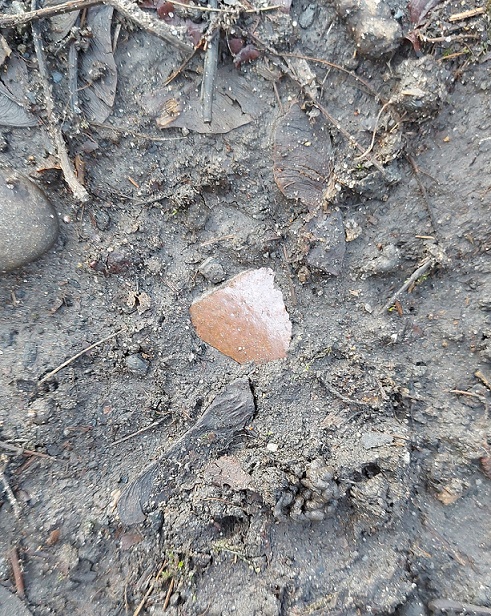

Some glass, peeking, shimmering, calling.


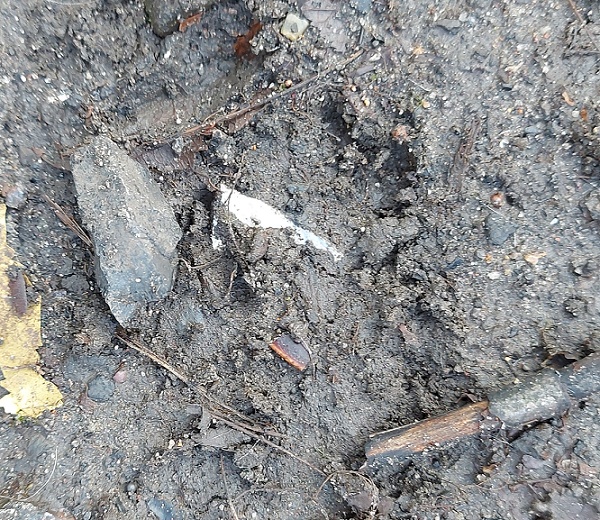
The bottle top/neck (or ‘finish’) is one which is called an ‘applied finish’ – it’s a solution to a problem of how do you make a clean neat break on a bottle that is hand blown into a mould? The answer is to make the lip and neck separately, and then ‘weld’ them together whilst the glass is still soft and malleable. If you look closely, you can see the join.

This dates the bottle to the Victorian or very early 20th century, as does its light bluey-green colour, and rectangular shape. It is small, so is probably a lemonade syrup bottle or something similar.
I walked on.
Beautiful, wonderful, pieces of archaeology, tiny fragments of history, of people, were throwing themselves at me. And who was I to argue?


Eventually I reached the end of the path, and on I went to the shop, vowing to come back that way, and walk in the other direction to see what else I could find. But, such is the way of the world, I needed to be elsewhere in Glossop and other chores distracted me, and with such mundanities crowding out the treasure, I didn’t come home that way. Who knows what I missed? Who knows what tiny fragments from the past await discovery, waiting for a person such as yourself, gentle reader, to pluck it from the ground and marvel over it, celebrating its form and colour, and invoking the past and the people who once used it. But beware… if you see an angry old lady with one ear, run.

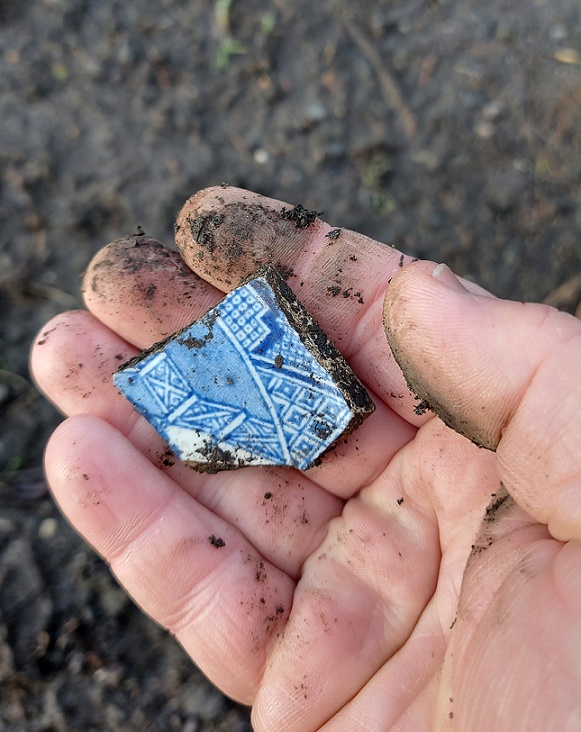
The willow pattern in particular was interesting in that once cleaned I could make out knife marks that had scratched into the glaze.

Who knows what conversations were had when those marks were made, or what the person was eating. Questions like that keep me doing archaeological things like this.

Nothing hugely interesting here, but all a bit of history. Top row, left, is a piece of porcelain that has a transfer picture on it – possibly of a woman (they’re quite predictable pictures – the golden brown bit could be hair or a gown). Next to that is a fragment of a stoneware ink pot. I wish I could show you how I know that, but from a photograph and using words it is difficult to describe – pottery is so tactile, so alive, you need your senses to ‘get’ it. Let’s just say size, shape, glaze, and feel, is what makes it so. Tell you what, I’ll film myself talking about it and put it on the YouTube channel, you’ll be able to see what I mean then. And I’m ignoring whoever it is that’s muttering “cure for insomnia” and “medical coma inducing nightmare“… bloody cheek. Bottom row, left, is a piece of moulded lead, with possible spokes coming from the outer rim. I have no idea what it is, but any suggestions would be welcome. All the other bits are fairly standard Victorian or early 20th century pottery.
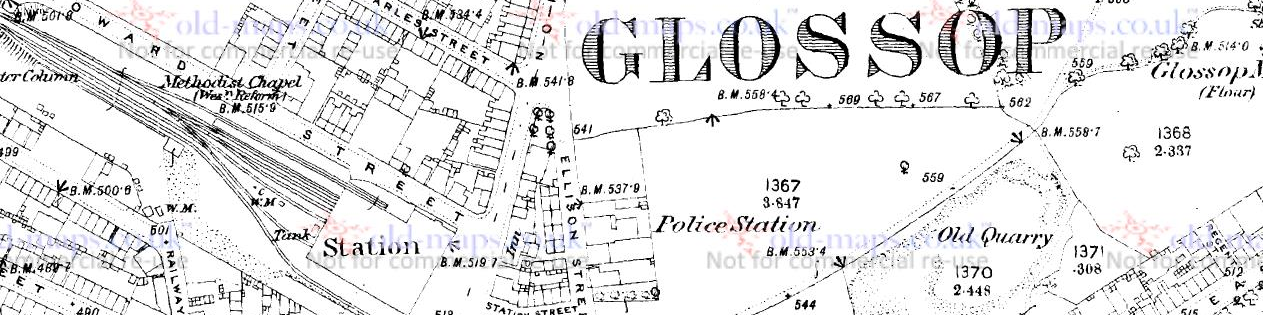
Harehills Park (aka the ‘Sandhole’, or ‘People’s Park’) was for a long time prior to the 1920’s a tip for the local houses, so it’s not surprising this stuff comes to the surface after a good rainfall. It’s always produced something for me, and I’ve blogged about it before (here), but have a good look next time you are passing through. And post whatever you find to me – I’ll put it up on the website.
Right, that’s your lot for this post! More soon, I promise. But until then look after yourselves and each other. And I remain, your humble servant.
RH

 The Glossop Cabinet of Curiosities