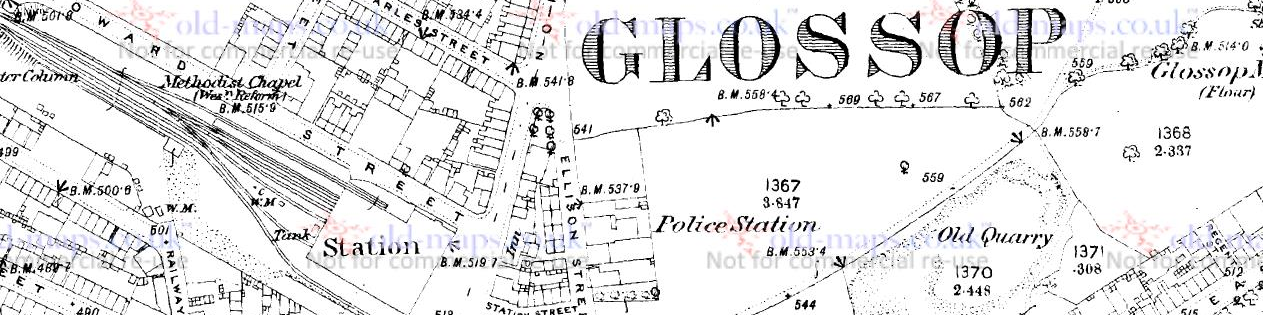
What ho, dear and gentle readers! Well, here we are again… pottery time! The second part of the Pottery Guide has hoved into view, and what a treat we have for you. I am going to go ahead and apologise in advance – it is heavy on pottery, but useful and fun, I hope. (Can anyone else hear that groaning and wailing… and gnashing of teeth. And no, no I don’t care about your “sainted aunt”, whoever is shouting).
SPONGEWARE
DATE: 1830’s – 1900’s
DESCRIPTION: Colourful repeated patterns printed with a sponge on a white background.
SHAPES: Bowls are very common, cups, mugs, tankards, small plates, larger plates, and jugs.
Wonderful, cheerful, simplistic, and yet incredibly attractive (not me, madam, but thank you). I have an almost childlike obsession with this pottery type, and it always makes me happy when I find some. Spongeware is characterised by shapes made with a natural sea sponge dipped into a coloured slip and dabbed onto a white background. The pot is then glazed and fired. The sponge is either applied all over, or it is cut into geometric shapes (diamonds, concentric circles, spirals, stars, zig-zags, swirls, etc.) or naturalistic forms (flowers, leaves, shamrocks, etc.), and dabbed in repeated patterns around the vessel.
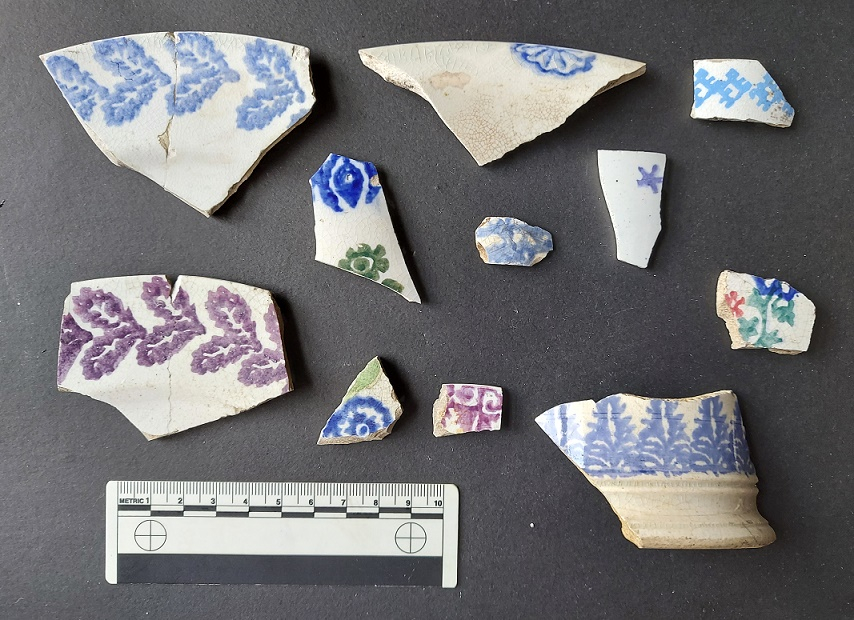
These patterns and shapes are fuzzy at the edges (the result of the sponge effect), are sometimes combined with hand-painted decoration (bands, blobs, leaves, etc.), with colours of a limited and pastel palette – light purple, blue, light green, yellow, pink, light red, etc.

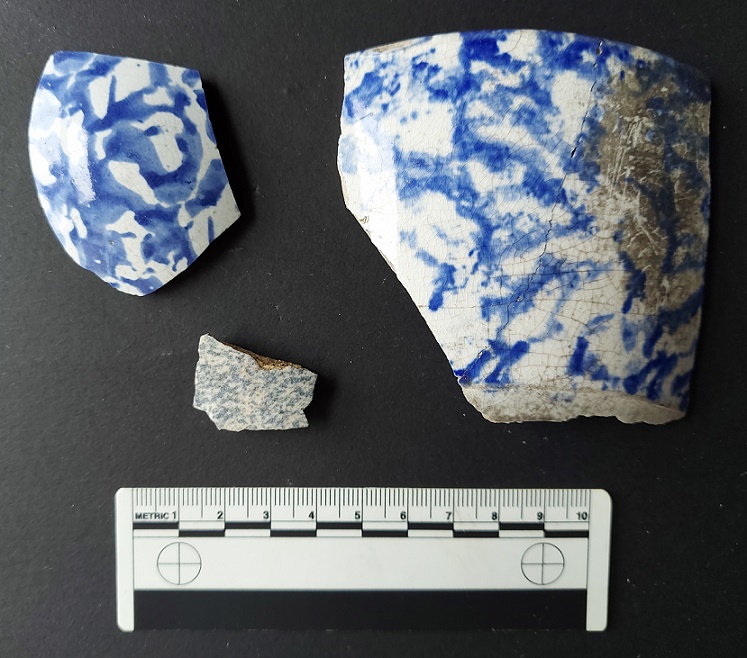
The pottery itself is normally of a fairly poor quality Pearlware (pre-1850) or Whiteware, with a earthernware fabric that is white or off-white.
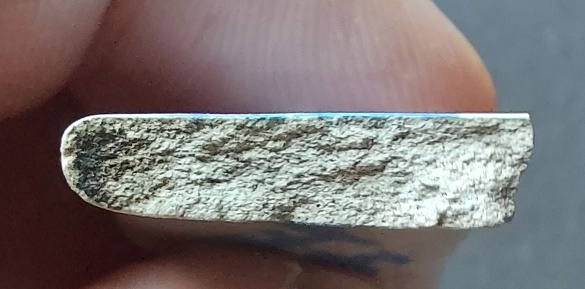
Sherds can sometimes be found broken with jagged rather than smooth edges, indicative of a low temperature firing and poor quality clay. Lovely though it is, it is Spongeware is not high quality, but it is the very essence of cheap and cheerful.

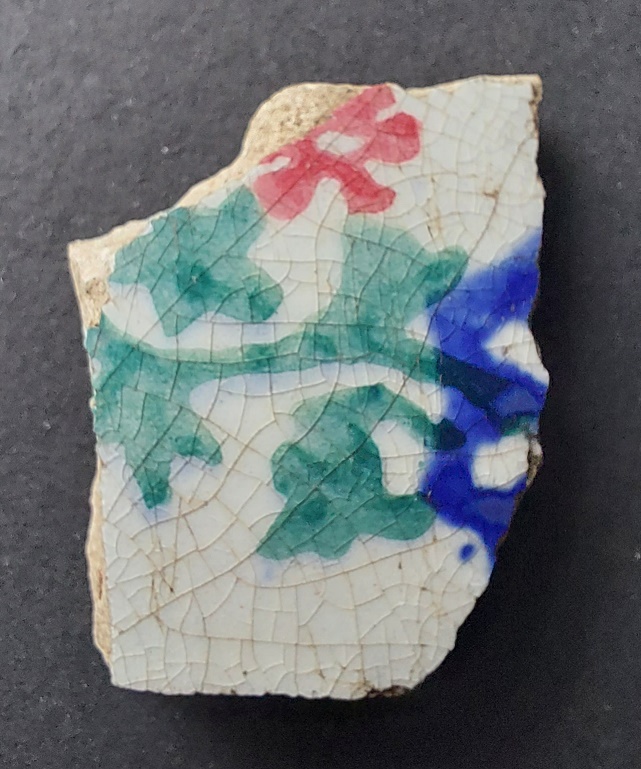
Spongeware is often associated with Scotland where it was made in great quantities, but there were also manufacturing centres in Stoke on Trent and other parts of the Midlands. These vessels were mass produced – probably ‘sponged’ as piece work at home (and thus probably by women) – and supplied to a ready market that wanted a more colourful, and cheaper, pottery than the transfer printed material that dominated the market.
American studies indicate there are broad chronological variations within the ware group. America and Canada were huge export markets for Spongeware, and given the relative newness of their country in terms of European material, a lot of research has been conducted on even the smallest and most common bits of pottery that would be overlooked here. The three variations within Spongeware are:
All-Over:
Densley packed, the natural random patterning of the sponge is used to cover the whole vessel, or dabbed in distinct areas – the upper part of bowls for example. Spatterware is the American name for this type of pottery, as it looks as though the paint has been spattered on randomly, occasionally in several colours one over another. Looking closely, it is possible to see the tell-tale repeated patterns of holes in the unshaped natural sponges (Photo 3 above). This type appears to have been most popular up to the 1860’s.
Cut Sponge
Here the sponge was shaped into neat geometric and naturalistic forms, and the patterns repeated. Starts in the 1840’s, and is popular until the 1880’s. The addition of painted decoration to this form seems to appear in the latter part of the 19th century and last into the early 20th century (Photos 1 & 2 above).
Open Sponge
Similar to Cut Sponge, but the shapes are more natural and less regular, rigid and geometric. This type seems to have been most popular from c.1850 to c.1900 (the blue sherds in Photo 3 above).
This stated, there is a lot of overlap between styles, and I’m not convinced the chronology is as straightforward as that. Also, does the American market reflect what was happening here? As I say, it is a broad guide, use it as you will.
Spongeware, in it’s modern incarnation, is still a popular design for plates, and Hamnett Towers has a dinner service decorated with designs made using this very attractive style. I should invite you all for cocktails and a slap up feed, and you can have a look (black tie, of course… I have standards).
Right ho, that’s it for this week. I have a few, less pottery focused articles in the pipeline (what do you mean “praise be”? Honestly, some people.) which I’ll get on asap. My life is fairly jam packed with Glossop related archaeology and history at the moment, which is great, if a little scary! I am working with the good folk of Glossop Creates developing a walk that involves history and bits of pot… watch this space. I was also recently in the Glossop Chronicle (read it here – the edition is dated 3/2/2022, and it’s page 11), and the Glossop Creates blog, too. The organisation, based in the historic gasworks on Arundel Street, has some wonderful and big ideas for the town, and deserves to be lauded from the rooftops for their vision. So there!
More about this, and other exciting things, next time, but until then, look after yourselves and each other, and I remain.
Your humble servant,
RH

 The Glossop Cabinet of Curiosities
Excellent Stuff Mr H. Very informative.
LikeLiked by 1 person
Found this helpful. Currently going through bags of Colonial archaeology in Parramatta NSW labelled “potato print”. Glad I can finally got onto the right path with your article and info from Diagnostic Artifacts in Maryland US.
LikeLike
Greetings from Glossop. You’re very welcome, and glad it helps. I’d love to see some of the colonial material from Australia, if you get a chance – it’s easy to forget that there is a world out there that shares this material culture.
LikeLike